Wombat Forest Society- Background
A history of community, cooperation, forest conservation and the struggle for sustainable forest management of the Wombat Forest. Advocating for environmental values, for locally available selectively sourced timber and community empowerment.
Forest History, Conservation and Victoria's Forest Wars
The Wombat Forest Society: A Different Approach to Forest Conservation, that worked...
The Wombat Forest Society (WFS) emerged in the mid-1990s from the communities surrounding the Wombat State Forest in central Victoria, particularly Daylesford, Trentham, Bullarto, Lyonville and neighbouring districts. It became a distinctive regional organisation within the Victorian and Australian environmental movements, challenging government forestry policies, investigating the ecological and economic consequences of native forest logging, and developing alternative approaches to forest conservation and management.
The Society's history is an important chapter in the wider story of the Wombat Forest, Victorian forest conservation, Australia's forest wars and the struggle to protect native forests from industrial exploitation. Its campaigns brought together environmental research, scientific analysis, political lobbying, public participation, community organising and direct action. Rather than relying exclusively on protest, the Society sought to challenge the evidence and assumptions used by governments and the timber industry to justify logging and woodchip production.
The Wombat Forest Society developed a reputation for questioning government sustainable-yield calculations, scrutinising forestry data, challenging woodchip export policies and examining the economic and social consequences of forest management decisions. It also recognised that timber workers and forest-dependent communities were stakeholders in the future of public forests, rather than simply opponents of conservation.
At the centre of the Society's work was the protection of the Wombat Forest's biodiversity, native wildlife, threatened species, soils, waterways, catchments and ecological integrity. The Society argued that public forests possessed natural, cultural, recreational and community values far beyond their commercial timber resources, and that these values deserved a central place in government decision-making.
Wombat Forest History: From Gold Mining and Timber Cutting to Conservation
The Wombat Forest occupies a substantial area of central Victoria's Great Dividing Range, extending across the forested country surrounding Daylesford, Hepburn Springs, Trentham, Bullarto, Lyonville, Blackwood and neighbouring communities.
For thousands of years before European settlement, the forest formed part of the Country of Aboriginal peoples, including the Dja Dja Wurrung, Wadawurrung and Wurundjeri Woi Wurrung. Their connections with the landscape, waterways, plants, animals and cultural places form the foundation of the region's human history.
The discovery of gold during the 1850s transformed the Wombat Forest. Mining settlements, underground gold workings, sawmills and growing towns created enormous demand for timber. Forests were extensively harvested for mine supports, buildings, fuel, railway infrastructure and other commercial purposes. By the late nineteenth century, the consequences of repeated timber extraction, fire and inadequate regeneration had become a major concern for Victorian forestry authorities.
During the twentieth century, forestry workers, local timber families and government agencies contributed to the regeneration and management of heavily exploited forest areas. Their efforts helped restore timber-growing capacity, although the recovery of commercial forest productivity did not necessarily restore the ecological characteristics of the forests that had existed before industrial harvesting.
By the late twentieth century, renewed native forest logging, intensive harvesting, timber allocations and woodchipping raised fundamental questions about the Wombat's ecological future. Growing public concern about wildlife habitat, forest structure, threatened species and the long-term sustainability of timber production provided the setting in which the Wombat Forest Society was formed.
The Formation of the Wombat Forest Society
The Wombat Forest Society arose during a period of increasing conflict over the management of Victoria's native forests. The environmental movement was challenging industrial logging, export woodchipping and government forestry policies, while timber-dependent communities faced uncertainty about employment, future timber supplies and regional economic change.
In the Daylesford and Trentham districts, the forest was closely connected to local history, employment, recreation and community identity. The Society recognised that successful forest conservation required more than demonstrating ecological damage. It also required an understanding of the political, economic and institutional forces responsible for forest management decisions.
The organisation brought together people with interests and experience in conservation, scientific research, forestry, community affairs and public policy. Its approach was to investigate the evidence behind government decisions, develop informed arguments, build alliances and pursue political and administrative change.
This combination of regional knowledge, independent research and strategic engagement distinguished the Society from many contemporary forest campaigns. Its members believed that conservation arguments could be strengthened by demonstrating weaknesses in government policy using the government's own information, and by presenting practical alternatives to environmentally damaging forest management.
Challenging Sustainable Timber Yields and Government Forestry Policy
One of the Wombat Forest Society's most significant contributions to the Victorian forest debate was its examination of the scientific and economic foundations of government timber allocations.
Forestry authorities relied on estimates of sustainable timber yield to determine how much timber could be harvested from public forests over extended periods. These estimates influenced sawlog allocations, timber industry investment, woodchip production and the long-term management of native forests.
The Society questioned whether official timber forecasts adequately reflected forest growth rates, past harvesting, available timber resources, environmental constraints and the condition of the forests themselves.
Through independent analysis of forest inventories, growth estimates, harvesting records and sustainable-yield models, the Society challenged the reliability of the figures used to justify continuing industrial timber production.
Its work became part of a wider debate involving forestry researchers, government departments, politicians and independent specialists, including the examination of sustainable-yield assessments associated with Tim Anderson, Brian Turner, Ian Ferguson and Jerome Vanclay.
The significance of this research extended beyond the Wombat Forest. It challenged the credibility of the resource estimates underpinning Victorian forestry policy and raised important questions about whether timber allocations were based on defensible long-term forecasts.
The Society's investigations helped bring technical forestry issues into public and political debate. Sustainable yield was no longer simply a calculation made within government departments; it became a matter of public accountability, environmental responsibility and the future of regional forest industries.
Export Woodchipping, Native Forest Logging and the Forest Wars
The expansion of export woodchipping was one of the defining controversies of Australia's forest wars during the 1980s and 1990s. Conservation organisations questioned the environmental and economic justification for harvesting native forests to produce relatively low-value woodchips, particularly where logging threatened biodiversity, wildlife habitat and the long-term condition of public forests.
The Wombat Forest Society investigated the relationship between sawlog harvesting, woodchip production, timber industry economics and Commonwealth export licensing arrangements.
Its opposition to woodchipping was informed by a broader concern about the industrialisation of native forest management. The Society examined whether timber extraction was being driven by the ecological capacity of forests or by the commercial requirements of mills, processors and export markets.
It also questioned claims about employment, resource availability and the economic benefits of woodchip exports. These investigations connected the Wombat Forest campaign with national debates over Commonwealth woodchip export licences, forest protection, regional employment and the responsibilities of governments to manage public forests in the public interest.
The Society's work demonstrated that forest conservation could involve challenging economic assumptions and regulatory decisions as well as opposing logging operations in the forest.
Regional Forest Agreements and the Politics of Forest Protection
The Regional Forest Agreement (RFA) process was a major turning point in Australian forest policy during the 1990s. Commonwealth and state governments sought to establish long-term arrangements covering forest conservation, timber production and the management of public native forests.
The Wombat Forest Society became involved in the debates surrounding the Western Victoria Regional Forest Agreement, examining forest assessments, conservation values, timber allocations and the assumptions used to determine future forest management.
The Society argued for greater transparency, more reliable scientific evidence and proper consideration of biodiversity, threatened species and the ecological consequences of industrial harvesting.
Its participation extended beyond formal submissions. Members engaged with politicians, government departments, forestry officials, conservation organisations and regional communities, seeking to influence decisions through research, correspondence, negotiation and public advocacy.
The RFA process also exposed differences within the environmental movement over campaign priorities, political strategies and the acceptability of compromises. The Society maintained its independent approach, placing particular importance on regional knowledge, scientific scrutiny and the protection of forest values.
The Western Victorian Forest Protection Network and Regional Conservation Alliances
The Wombat Forest Society recognised that the problems affecting the Wombat Forest were connected to wider forest management policies throughout western Victoria.
Through its involvement in establishing and developing the Western Victorian Forest Protection Network, the Society helped strengthen cooperation between regional conservation groups concerned about native forest logging, woodchipping, biodiversity protection and government forest policy.
The network provided opportunities for organisations from different parts of western Victoria to share information, coordinate responses, examine forestry proposals and develop common positions on environmental issues.
This regional cooperation was important because government forestry decisions were often made across large administrative regions, while individual community groups were primarily concerned with particular forests and local landscapes.
By connecting these groups, the network strengthened the ability of regional conservation organisations to participate in broader policy debates and challenge decisions affecting forests beyond their immediate districts.
The Society's regional alliance-building also reflected its belief that local environmental organisations could make substantial contributions to state and national policy without surrendering their independence or becoming subordinate to larger metropolitan campaign organisations.
The Wombat Forest Society and the Victorian Environmental Movement
The Wombat Forest Society operated within a diverse and sometimes divided Victorian environmental movement. Organisations including the Wilderness Society, Friends of the Earth, Environment Victoria and numerous regional conservation groups adopted different approaches to native forest protection, timber industry reform, industrial plantations and direct action.
These differences reflected contrasting political strategies and views about how environmental change could best be achieved. Some organisations emphasised campaigns to end native forest logging, while others explored changes to forestry practices, resource allocation, community management and the environmental standards governing plantations.
The Society supported cooperation across the conservation movement but retained its independence in research, policy development and political engagement.
It placed considerable emphasis on the need for conservation campaigns to understand the social and economic circumstances of regional communities. Its approach distinguished between the interests of timber workers and the decisions of governments, timber companies and forest management authorities.
The Society's history therefore offers an important perspective on the internal debates of Australia's environmental movement, particularly the relationship between regional conservation groups, larger campaigning organisations, organised labour and the development of alternatives to industrial forestry.
Timber Workers, Trade Unions and the Social Dimensions of Conservation
A distinctive feature of the Wombat Forest Society's approach was its recognition that forest conservation and the future of timber-dependent communities were closely connected.
The Society did not regard timber workers as the architects of government forestry policy. It recognised that workers and their families depended on employment and that decisions about timber allocations, mill investment and forest management could have serious consequences for regional communities.
This perspective encouraged engagement with timber industry representatives, trade unions and others concerned about the future of forestry employment.
The Society's work intersected with broader debates involving the Construction, Forestry, Mining and Energy Union (CFMEU), regional timber businesses and environmental campaigners seeking to connect ecological protection with social justice.
Its interest in employment, sustainable resource management and industry reform reflected a belief that conservation policies should address the economic structures driving forest exploitation rather than directing hostility towards workers.
These relationships formed part of the Society's wider political strategy: challenging environmentally damaging forestry while recognising the legitimate concerns of people whose livelihoods were affected by changes in forest management.
Powerful Owls, Threatened Species and the Bullarto Forest Protest
The protection of native wildlife and threatened species was central to the Wombat Forest Society's conservation activities.
The Wombat Forest provides habitat for a diversity of native animals, including the Powerful Owl, Greater Glider, koalas, possums, wallabies and numerous forest birds, reptiles and invertebrates. Mature trees, hollow-bearing trees, connected forest habitat and healthy waterways are essential components of the forest's ecological integrity.
The Society challenged forestry operations where it considered that logging threatened important wildlife habitat or where environmental assessments and protection measures were inadequate.
One of the most prominent episodes in its history was the Bullarto forest protest in 2000, involving concerns about logging and the protection of Powerful Owl habitat.
The Bullarto action brought together the Society's scientific investigations, political advocacy and willingness to participate in direct action. It demonstrated how the organisation's methods could move from research and negotiation to public protest when important conservation concerns remained unresolved.
The action was subsequently examined by Anitra Nelson in her account of the Society's tactics, audits and campaigning activities, published in Australia's Ever-Changing Forests V in 2002.
Bullarto became an important episode in the history of Wombat Forest conservation and an illustration of the relationship between environmental research, public accountability and direct action during the Victorian forest wars.
Community Forest Management: Developing Alternatives
The Wombat Forest Society's involvement in community forest management reflected its interest in developing alternatives to conventional government-controlled industrial forestry.
The Society examined whether local communities could participate more directly in determining the management of public forests, including decisions about biodiversity protection, recreation, timber production, ecological restoration and other forest values.
The Wombat Community Forest Management experiment became part of a wider debate about community participation, government accountability and the future of forest governance.
The initiative raised important questions about the responsibilities of government agencies, the authority of local communities and the relationship between conservation objectives and commercial timber supply.
The Society argued that meaningful community involvement required more than consultation over decisions already made by government departments. It required genuine participation in establishing management objectives, assessing forest values and determining appropriate activities.
The difficulties encountered during the experiment illustrated the institutional and political challenges of transferring meaningful influence over public forest management to communities.
Despite these difficulties, the Society's involvement contributed to the discussion of community forestry, participatory environmental governance and alternatives to established forestry administration.
Wombat Forest Biodiversity, Wildlife and Recreation
The Wombat Forest's ecological, recreational and cultural values were fundamental to the Society's work.
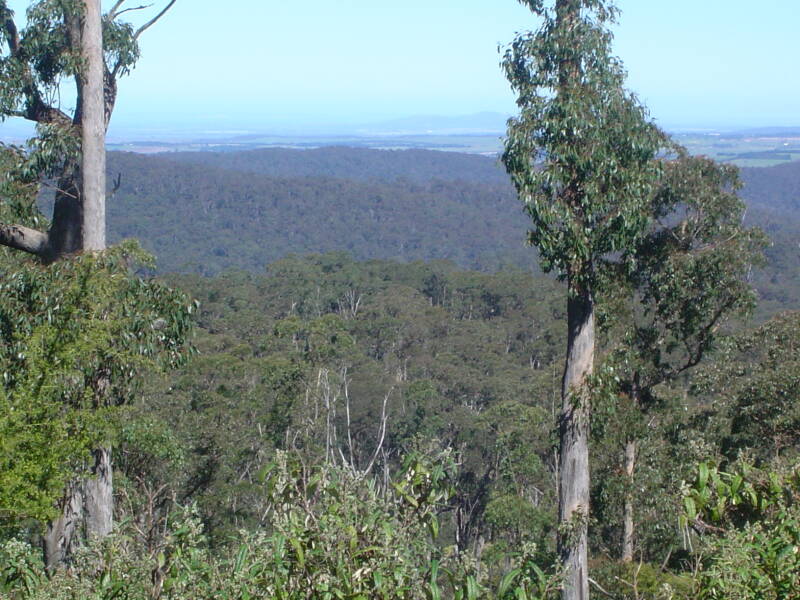
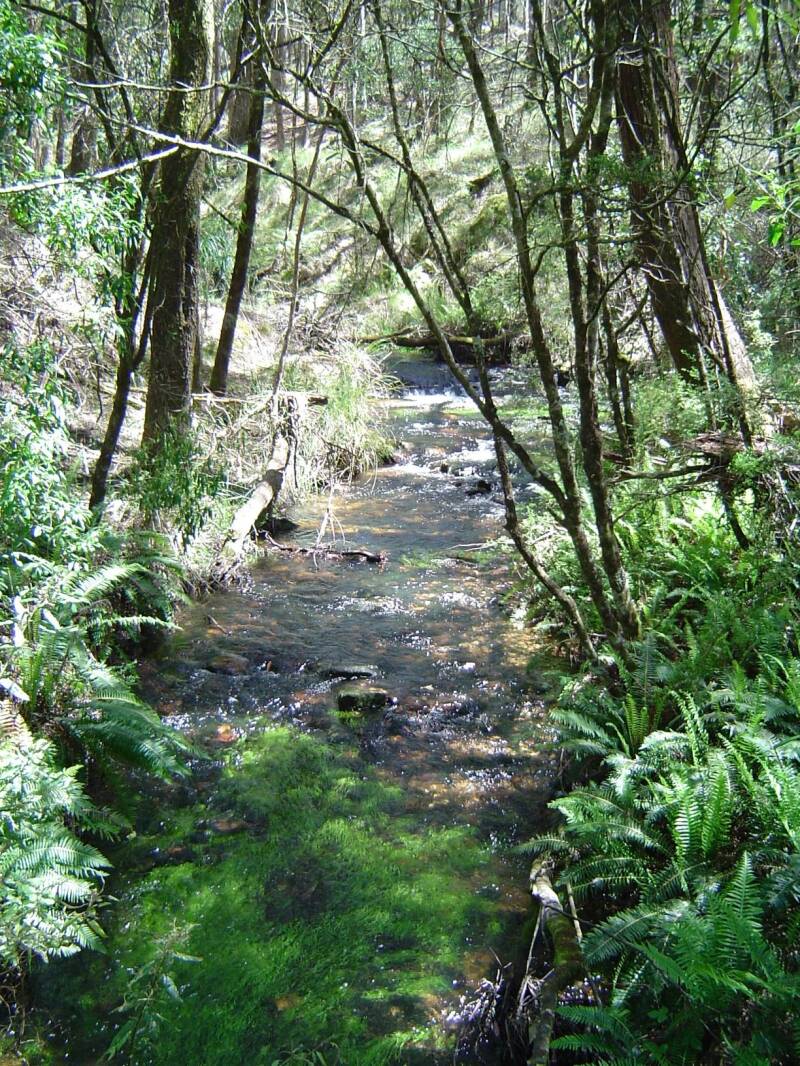
Its eucalypt forests, gullies, streams and diverse vegetation communities provide habitat for native wildlife and contribute to the health of the surrounding landscape. The forest also supports important catchments, soils, waterways and ecological processes that extend well beyond the boundaries of individual logging areas.
For communities around Daylesford, Trentham, Hepburn Springs, Bullarto and Blackwood, the Wombat has long been a place for bushwalking, camping, cycling, horse riding, birdwatching, nature study and other forms of outdoor recreation.
The Society argued that these values should not be subordinated to industrial timber production or assessed solely through commercial forestry calculations.
Its conservation work recognised the importance of mature forest habitat, threatened species, ecological diversity and the long-term recovery of forests affected by earlier harvesting.
The protection of the Wombat Forest was therefore not simply a dispute about timber production. It concerned the wider question of how society values public forests and whether their ecological and community benefits are adequately recognised in government policy.
The Wombat Forest Society's Contribution to Australian Environmental History
The Wombat Forest Society occupies a distinctive place in the history of Victorian and Australian forest conservation.
Its contribution was not defined by the size of its membership or the publicity generated by individual protests. It lay in the organisation's capacity to bring independent research, scientific scrutiny, political strategy and community engagement into a major environmental conflict.
The Society challenged government sustainable-yield calculations, investigated the economics and regulation of woodchipping, participated in the Regional Forest Agreement process, defended threatened-species habitat and contributed to the development of regional conservation alliances.
It also explored community forest management, engaged with timber workers and industry representatives, and questioned whether the conventional division between environmental protection and regional employment adequately represented the choices available to governments and communities.
Its approach demonstrated that regional environmental organisations could influence debates extending well beyond their local forests. By investigating the evidence underpinning forestry policy and engaging directly with political and administrative institutions, the Society helped expose important questions about public accountability, ecological sustainability and the management of Australia's native forests.
The Society's history also illuminates the diversity of the Australian environmental movement. Conservation campaigns were not all conducted in the same way, nor were their participants united around identical strategies. The Wombat Forest Society developed its own methods, combining cooperation with other environmental groups, independent policy analysis, regional alliances and a willingness to challenge both government and established campaigning assumptions.
The Wombat Forest Society Historical Archive
The Wombat Forest Society website preserves the history of the organisation and its contribution to forest conservation through historical accounts, campaign records, scientific reports, government correspondence, policy submissions, newspaper articles, photographs and other archival material.
These records document the Society's work on Wombat Forest conservation, native forest logging, sustainable timber yields, woodchip export licensing, threatened-species protection, the Regional Forest Agreement process, the Western Victorian Forest Protection Network and community forest management.
They also provide a historical record of the environmental debates that shaped Victoria during the 1990s and early 2000s, including the relationships between conservation organisations, governments, forestry authorities, timber businesses, trade unions and regional communities.
The archive is a resource for researchers, historians, students, conservationists and members of the public interested in the history of the Wombat Forest, Daylesford, Trentham, Victorian forestry, Australian environmental activism and the forest conservation movement.
The Wombat Forest Society's story is ultimately about the ability of a regional community organisation to challenge powerful institutions through evidence, persistence, political engagement and a commitment to the protection of the natural environment.
Its enduring contribution was to demonstrate that the future of public forests should be determined not simply by the commercial demands of timber production, but by an informed consideration of biodiversity, ecological sustainability, community interests and the responsibility to protect forests for future generations.
A community that stood up for the Wombat Forest.
And did it in its own way.....