
Tim Anderson — Community Empowerment, Political Strategies and Forest Modelling
Tim Anderson: Forest Reform, Community Campaigning and the Politics of Sustainable Forestry
An environmental history of Tim Anderson’s work with the Wombat Forest Society, the Western Victorian Forest Protection Network, Forest Stewardship Council Australia and the wider Australian forest movement.
Introduction: An Environmental Campaigner Who Challenged the System from Within and Without
Tim Anderson's contribution to Victorian and Australian forest conservation is distinguished not simply by the campaigns in which he participated, but by the methods he employed and the changes he sought to achieve. From the late 1980s, through the forest conflicts of the 1990s, the substantial reforms of the early 2000s and the development of national forest certification standards, Anderson pursued an approach that combined independent technical research, political lobbying, community organisation and a willingness to work with people whose interests and opinions differed considerably from his own.
His work challenged a fundamental assumption that had shaped much of Australia's forest debate: that protecting forests and maintaining the economic and social wellbeing of forest-dependent communities were necessarily opposing objectives. Anderson argued that the real problem frequently lay elsewhere—in inadequate forest information, questionable timber resource calculations, inappropriate management systems, political decisions divorced from ecological realities, and institutions that had become insufficiently accountable to the communities and forests they were supposed to serve.
As a founding member and president of the Wombat Forest Society, Anderson helped develop an environmental campaign that challenged the technical foundations of Victoria's native forest timber allocations. His sustainable-yield investigations, undertaken in close association with Loris Duclos and other Society members, became part of a much wider examination of the credibility of government forestry calculations. The resulting debate contributed to independent reviews and the Victorian Government's major forestry reforms announced in 2002.
Anderson's involvement extended well beyond the Wombat. He established and convened the Western Victorian Forest Protection Network, bringing together regional conservation, community and Indigenous organisations during the Western Victoria Regional Forest Agreement process. He undertook forest resource investigations for Environment Victoria and the Australian Conservation Foundation, participated in debates over plantation forestry, and worked to establish Forest Stewardship Council certification in Australia. His subsequent roles as a founding director, chair and participant in the Australian FSC standard-development process reflected his conviction that environmental reform required institutions capable of bringing competing interests into sustained, constructive negotiation.
Recognition of his environmental service through the Commonwealth Centenary Medal acknowledged a body of work that crossed the boundaries between grassroots activism, scientific scrutiny, public policy and institutional reform.
His career also reveals tensions within the Australian environmental movement. Anderson was prepared to challenge forestry agencies and industry practices forcefully, but he was equally willing to disagree with environmental organisations when he believed their strategies overlooked scientific evidence, social justice or the needs of regional communities. He regarded environmental campaigning not as a contest to identify enemies, but as a means of changing the decisions, assumptions and institutions responsible for environmental damage.
That philosophy provides the central thread through more than three decades of forest-related work.
1. The Beginnings: Community Involvement in the Wombat Forest
Anderson's involvement in forest management began before the Wombat Forest Society was established. His records identify participation in a Wombat Forest community liaison or consultative committee during the early 1990s, with one later account dating his involvement from 1988. The independently documented period of committee membership is 1991–1993. This early experience introduced him to the difficulties of reconciling timber production, conservation, water catchment protection, recreation and the interests of surrounding communities.
The Wombat State Forest had a long and complicated history. Gold mining, timber extraction, sawmilling, settlement and successive forestry practices had transformed substantial parts of the forest. By the late twentieth century, the increasing mechanisation of timber harvesting, changes in sawlog utilisation and the growth of woodchipping were creating new pressures. At the same time, scientific understanding of biodiversity, catchment protection and forest ecology was expanding, while communities were increasingly demanding a greater say in the management of public forests.
Anderson's early participation in consultation processes gave him an appreciation of both their potential and their limitations. Government committees could provide opportunities for community involvement, but meaningful participation depended upon access to reliable information and the willingness of agencies to reconsider established policies. Consultation could become little more than a formality if the fundamental assumptions underlying forest management were not open to examination.
This experience helped shape his subsequent political strategy. Rather than concentrating exclusively on opposing particular logging operations, he became interested in the systems through which harvesting levels were calculated, forest plans prepared, licences issued and decisions justified. If the underlying calculations were wrong, then challenging individual logging coupes would not be enough. The entire basis of forest management needed to be examined.
2. Founding the Wombat Forest Society: Building a Different Kind of Campaign
The formation of the Wombat Forest Society in 1994 brought together people who might otherwise have been expected to stand on opposite sides of the forest debate. Among them were residents from established timber families, people with experience in logging and sawmilling, conservationists, field naturalists and newer residents concerned about the future of the forest.
Anderson was a founding member and served as president from 1996 to 2002, a period confirmed by his contemporary biographical account and the Society's newsletters. His leadership coincided with the Society's most intensive research, public campaigning and political engagement.
The Society's distinctive strength was its recognition that people could disagree about timber harvesting while sharing serious concerns about the condition of the forest. Local sawmillers understood the importance of a reliable timber resource, but some were also concerned that the rates of harvesting being permitted could undermine their own long-term future. Conservationists wanted to protect biodiversity, water catchments and forest structure. Both groups had reason to question whether government management was genuinely sustainable.
This created the possibility of a campaign that did not depend upon portraying timber workers as environmental enemies. Anderson and his colleagues increasingly directed their criticism towards the policies, calculations and administrative decisions that determined how the forest was used.
The approach was not passive or conciliatory for its own sake. The Society was prepared to challenge forestry officials, ministers and industry claims vigorously. It sought access to departmental information, examined the government's figures, monitored logging operations and used its findings to confront decision-makers. It also participated in public protests and direct action when considered necessary. What distinguished its methods was the effort to establish the facts and identify the people with the authority to change the situation.
The practical significance of this approach was demonstrated in September 1998, when the Wombat Forest Society joined Central Victorian Forestry Company and Midlands sawmillers in a submission to Victorian Conservation and Land Management Minister Marie Tehan. The submission raised shared concerns about long-term sawlog sustainability and called for adequate government commitment and resources to protect the future of the forest.
This was a remarkable political development. An environmental organisation and timber interests were jointly questioning the adequacy of government forest management, rather than fighting one another over the consequences. Their shared position did not mean they agreed on every aspect of forest policy. It demonstrated that common ground could be established around the need for credible information, sustainable resource use and the long-term interests of the community.
The joint submission was also strategically important. It made it more difficult to dismiss the Society's concerns as simply an environmental campaign against the timber industry. When people who depended upon timber production were also questioning the resource calculations, the government faced a challenge to the credibility of its forest management system.
3. Sustainable-Yield Analysis: Challenging the Foundations of Victorian Forestry
Anderson's most consequential early work was his investigation of the sustainable sawlog yield calculations used by the Victorian Department of Natural Resources and Environment. Working closely with Loris Duclos and other members of the Wombat Forest Society, he helped develop methods for examining departmental data and testing whether the timber volumes promised to industry were consistent with the actual productive capacity of the forest.
The work was technically demanding. Government sustainable-yield calculations depended upon assumptions about the area available for harvesting, the age and condition of forest stands, tree growth rates, merchantable timber volumes, harvesting rotations, regeneration and future timber production. Small errors or optimistic assumptions in several parts of a model could produce substantial overestimates of the volume that could be harvested over time.
The Society's investigations compared predicted timber volumes with actual harvesting records, examined the area of forest available for production, investigated past logging patterns and questioned the relationship between projected yields and the condition of forest stands. Duclos's work on forest auditing and computer-based analysis was particularly important to this effort. The research was collaborative, and its technical achievements should be understood as the product of their complementary work and the Society's broader access to local knowledge.
In May 1999 Anderson published the Midlands Forest Management Area Sustainable Sawlog Yield Model Analysis and Critique, a substantial examination of the assumptions underlying the government's calculations. The report challenged the credibility of the projected sawlog resource and warned that continuing existing harvesting rates could damage both the forest and the long-term viability of the timber industry.
The report did not confine itself to timber volumes. It examined the forest's catchment values, biodiversity, historical logging patterns, regeneration and the implications of forestry decisions for local communities. This wider perspective was essential to Anderson's argument. A harvesting level could not be considered genuinely sustainable merely because a computer model predicted a continuing supply of timber. Sustainability also required protection of ecological values and an honest assessment of the forest's ability to recover from previous harvesting.
One of the report's central challenges was to the use of projected timber volumes from stands that had not yet demonstrated their capacity to produce the predicted resource. Anderson questioned whether future harvesting schedules were based upon realistic assumptions about the forest's condition and growth. He also drew attention to the relationship between shelterwood harvesting practices, the timber retained after logging and the capacity of those stands to provide a subsequent harvest.
The implications extended beyond the Wombat. If government calculations had overstated the productive capacity of the Midlands Forest Management Area, similar problems might exist elsewhere in Victoria. The issue was therefore not simply whether a particular forest was being overharvested. It was whether the State could reliably determine how much timber its native forests could sustain.
The importance of Anderson's investigation was that it converted concerns about overlogging into a technical challenge that government could not easily ignore. The Society was no longer relying only upon observations of damaged forest or general objections to intensive harvesting. It was questioning the government's calculations using its own data and demanding that the assumptions be independently examined.
4. Political Lobbying and the Turner–Ferguson Review
Anderson's sustainable-yield investigation became the centre of a sustained lobbying campaign directed at both Victorian and Commonwealth governments. The Society understood that technical research, however strong, would not automatically change forest policy. The findings needed to reach ministers, parliamentary representatives, government advisers and people capable of commissioning independent scrutiny.
A particularly important development occurred in August 1999. Commonwealth Minister for Forestry and Conservation Wilson Tuckey wrote to Anderson acknowledging his request for an independent examination of the Midlands sustainable-yield methodology. Tuckey advised that the Society's paper had been referred for examination and that he proposed asking Professor Ian Ferguson and Dr Brian Turner to prepare a report for the Regional Forest Agreement process.
The resulting Turner–Ferguson review, completed in February 2000, directly examined the issues raised in Anderson's critique. The reviewers met Anderson, representatives of the timber industry and union movement, and departmental technical staff. They identified ten principal issues requiring examination.
The review did not accept every argument advanced by Anderson. On several matters the authors disagreed with his interpretation of departmental information or considered the evidence insufficient to establish the claimed problem. Nevertheless, their report demonstrated that the Society had succeeded in bringing the foundations of the government's calculations into an independent technical process.
Anderson responded in March 2000 with a detailed critique of the Turner–Ferguson findings. He argued that the review's conclusions were more reassuring than the underlying evidence justified, particularly where essential information remained uncertain or unavailable. His response challenged the treatment of logging history, predicted and actual timber volumes, the productive forest area and other variables fundamental to sustainable-yield calculations.
This exchange illustrates an important feature of Anderson's political and technical method. He did not regard an independent review as the end of the argument merely because respected academics had examined the question. Where he believed their conclusions were unsupported, he challenged them in detail. His objective was not simply to secure an official investigation, but to establish whether the government could substantiate its timber commitments.
The campaign helped move sustainable-yield modelling from a relatively specialised administrative issue into a wider political controversy. The question of whether Victoria's native forests could sustain their licensed harvesting levels became increasingly difficult to separate from the future of the timber industry, the Regional Forest Agreements and the credibility of government forestry policy.
5. The Vanclay Review and the 2002 Forestry Reforms
The next major development was the statewide review undertaken by Professor Jerome Vanclay and Dr Brian Turner. Their October 2001 report, Evaluation of Data and Methods for Estimating the Sustainable Yield of Sawlogs in Victoria, examined the information and methods used to estimate sustainable sawlog yields across Victorian forest management areas.
The report identified significant weaknesses in the information available to support some long-term timber commitments. Although it found that the department possessed the technical capacity to produce reliable estimates, it concluded that competing priorities and inadequate attention to resource assessment had undermined the quality of information in several regions. It also warned that uncertainty in resource estimates limited the department's capacity to make reliable long-term commitments to industry.
The report made 25 recommendations addressing resource information, modelling, monitoring, transparency and forest management. Its findings did not amount to a wholesale endorsement of every criticism advanced by the Wombat Forest Society. Indeed, the reviewers considered the empirical support for the Midlands estimates stronger than for many other forest management areas. Nevertheless, the statewide investigation confirmed that serious deficiencies existed in the information supporting parts of Victoria's timber allocation system.
In February 2002, the Bracks Labor Government announced Our Forests Our Future, a major restructuring of native forest timber allocations and the industry. The policy involved substantial reductions in timber commitments, changes to forest management and assistance for affected businesses and workers.
The significance of Anderson and Duclos's contribution is supported by contemporary and subsequent forest-policy commentary. Their work helped expose weaknesses in the existing resource estimates and provided a technical and political impetus for further examination. Their investigations were not the sole cause of the reforms, which also reflected government reviews, wider environmental campaigning, industry pressures and political decisions. However, their contribution was unusually direct for a small regional environmental organisation.
Anderson is reported to have spent a day moving between Minister Garbutt, Premier Bracks and Deputy Premier Thwaite's offices' review the proposed Our Forests Our Future reforms and suggesting changes were he believed the policy could be strengthened.
The wider policy changes were substantial. A contemporary analysis of Victorian rainforest politics recorded a reduction in the state's relevant legislated D-plus-grade sawlog commitments from approximately 249,408 cubic metres to 143,000 cubic metres, a reduction of about 43 per cent. That figure refers to a particular category of sawlog commitments and should not be confused with a uniform reduction across every forest management area or timber product. The reductions varied considerably between regions.
For Anderson, the reforms represented the culmination of years of research, lobbying and community campaigning. They demonstrated that a small organisation, without the resources of a major environmental institution, could influence statewide policy by identifying a fundamental weakness in government decision-making and pursuing it through technical and political channels.
There was also a difficult social dimension. Reduced timber allocations had consequences for sawmills, contractors, employees and communities already facing economic pressures. Anderson's own account records that he and other Society members worked with local mills affected by the reductions to identify alternative employment and economic opportunities. This reflected a consistent principle in his environmental work: achieving ecological reform did not remove the responsibility to consider the people whose livelihoods were affected.
The Wombat campaign's success therefore cannot be measured only by reductions in logging. Its more substantial achievement was helping establish that forest resource calculations had to be credible, transparent and open to independent examination, and that the consequences of correcting them required a socially responsible response.
6. Environment Victoria and the Portland Forest Management Area Investigation
By 2001 Anderson's sustainable-yield research had extended well beyond central Victoria. One of his most important investigations outside the Wombat was commissioned by Environment Victoria and examined timber harvesting in the Portland Forest Management Area in southwestern Victoria.
The Portland forests had experienced extensive harvesting and land-use change, while the remaining native forests and woodlands supported important indigenous, biodiversity and conservation values. The region was also economically dependent upon forestry, timber processing and the broader agricultural economy. These circumstances made the reliability of government timber allocations a matter of both environmental and regional economic importance.
Anderson applied the analytical methods developed through the Wombat campaign to the Portland forest resource. The study examined the relationship between the available forest area, the rate of harvesting and the government's declared maximum sustainable yield. It questioned whether the continuing level of harvesting could be reconciled with the forest's productive capacity.
Environment Victoria released the findings on 11 November 2001 under the heading Study reveals excessive logging in Portland forests. Its accompanying media backgrounder reported that the equivalent of a 50-year harvesting rotation was being applied to an area of forest that, according to the study's assessment, would require approximately 120 years to complete a comparable rotation.
The report calculated that the average area being harvested was approximately 445 hectares annually, more than twice the approximately 188 hectares that the study considered sustainably available. It further argued that the existing sawlog allocation of approximately 9,400 cubic metres annually could not be maintained over the long term. These were the study's estimates, rather than figures independently established by a subsequent government audit.
Environment Victoria used the investigation to call upon the Bracks Government to cease logging and woodchipping in the Portland Forest Management Area and provide a transition package for affected sawmills. Importantly, its proposal also recognised the need to assist businesses and workers in moving towards plantation timber supplies.
This was an example of Anderson's technical work becoming the basis of a wider environmental organisation's political campaign. Environment Victoria could use its established public profile and access to government to promote the findings, while Anderson supplied the detailed resource analysis that supported the campaign's demands.
The Portland investigation also strengthened the wider argument that Victoria's forestry problems were systemic rather than confined to the Wombat. Similar questions about timber availability, harvesting rates and long-term resource security were emerging in different regions. Anderson's contribution was to demonstrate that government forestry assumptions could be tested independently, using available information and transparent analytical methods.
The investigation is documented in the contemporary Environment Victoria media release and backgrounder included in the supplied Portland report collection. Anderson's role is also recorded in the parliamentary biographical material associated with his later FSC Australia directorship.
Parliament of Australia+1
7. The Australian Conservation Foundation and Parliamentary Scrutiny
Anderson's work as a consultant to the Australian Conservation Foundation further extended the application of the Wombat Forest Society's research methods to broader Australian forest policy.
His own professional account records that he undertook sustainable-yield analyses and forest management audits for community organisations in Victoria and interstate, including consultancy work for both ACF and Environment Victoria. These engagements reflected the growing relevance of his experience in examining timber allocations and identifying weaknesses in government forest management information.
The importance of this work lay in its capacity to connect local evidence with national policy. Forest resource estimates influenced more than individual harvesting decisions. They affected Commonwealth–state agreements, industry investment, employment forecasts, conservation reserves and the credibility of claims that Australian native forests were being managed sustainably.
Anderson's work with ACF in 1998, formed part of this wider effort to subject forest management decisions to independent scrutiny. The supplied historical timeline also identifies an ACF study and a presentation to a Senate committee. The precise committee hearing, date, title of the ACF report and the extent to which Anderson's analysis was adopted in the committee's findings require confirmation against the parliamentary transcript and final committee report.
Nevertheless, the broader significance is clear. Anderson had moved from participating in local forest consultation to producing technical work that could be used by major environmental organisations in state and federal policy processes. This gave regional community research a route into institutions that smaller local groups often struggled to reach.
It also illustrated the practical benefits of cooperation between regional campaigners and national environmental organisations. ACF possessed policy staff, political relationships and organisational resources that could amplify technical research. Anderson and the Wombat Forest Society brought local knowledge, experience in interpreting forestry data and a willingness to challenge accepted assumptions.
Such cooperation was not dependent upon agreement on every aspect of forest policy. Anderson's approach was to work with organisations where objectives and methods overlapped, while retaining the independence to disagree where he believed environmental strategies were inadequate or socially damaging.
8. Establishing the Western Victorian Forest Protection Network
One of Anderson's most important organisational achievements was the establishment and convening of the Western Victorian Forest Protection Network (WVFPN) during the Western Victoria Regional Forest Agreement process of the late 1990s.
The Regional Forest Agreements were intended to provide a long-term framework for balancing conservation, timber production and other forest uses. They involved extensive scientific assessments, public consultation, negotiations between Commonwealth and state governments, and decisions with major consequences for regional forests and communities.
For smaller environmental and community organisations, the process presented considerable difficulties. The technical material was extensive, the consultation procedures complicated and the resources required to participate effectively often beyond the capacity of volunteer groups. There was also a danger that the detailed knowledge held by regional communities would be overshadowed by government departments, industry organisations and larger metropolitan-based environmental groups.
Anderson and O'Mara recognised that individual regional groups could exercise greater influence by cooperating. He became the founder and convenor of a network that, according to his professional account, brought together more than 30 community, field naturalist and Indigenous-based organisations. Peter O'Mara was an important colleague in bringing all of these groups and individuals together and to work with a united purpose.
The Network connected groups concerned with forests across western Victoria, including the Wombat, Otways, Enfield, Portland and surrounding regions. Participants included the Wombat Forest Society, Otways Ranges Environment Network, Geelong Community Forum and Portland Field Naturalists, local indigenous organisations, together with other local conservation and community organisations.
The Network's work was practical and politically focused. It helped regional organisations share information, understand the RFA process, prepare submissions, organise public meetings and coordinate their responses to government proposals. It also provided a means for groups to combine local knowledge with broader policy analysis.
An account published by the Otways Ranges Environment Network confirms that regional conservation organisations cooperated through the WVFPN during the West RFA process. It records that the Network received some Commonwealth funding and assisted groups with submissions, public meetings and monitoring the consultation process.
Anderson's role as convenor required more than administrative coordination. Regional environmental organisations did not necessarily agree on every aspect of forest management. Some were principally concerned with biodiversity protection and reservation of particular forests. Others focused on sustainable harvesting, catchment management, forestry practices, community participation or the economic consequences of timber policy.
The Network's effectiveness depended upon identifying common objectives without requiring every member to abandon its own priorities. This was consistent with the approach Anderson had helped establish in the Wombat Forest Society. Cooperation was built around matters on which organisations could act together, rather than insisting upon ideological uniformity.
The Network's existence also challenged a common assumption about environmental campaigning: that effective political coordination required centralised control by a large organisation. The WVFPN offered a different model, in which regional groups retained their identities while sharing research, representation and political influence.
9. What the Western Victorian Forest Protection Network Achieved
The WVFPN's achievements need to be considered in the context of the West RFA process and the wider political developments that followed. Its contribution was not limited to a particular reserve decision or a single ministerial announcement. It helped establish a regional conservation voice in a process that would otherwise have been difficult for many local organisations to influence.
One important achievement was strengthening the capacity of regional groups to participate in the RFA consultation process. The Network assisted in organising submissions and public meetings, helped groups understand the implications of government proposals and supported coordination across different forest regions. This meant that the concerns of individual communities could be presented as part of a wider pattern of problems in forest management rather than as isolated local objections.
The Network also contributed to the political pressure surrounding the West RFA. Community dissatisfaction with the process and its proposed outcomes led Victorian Environment Minister Sherryl Garbutt to establish an independent panel to review public submissions. The panel conducted public presentations between January and March 2000. Although the establishment of the panel cannot be attributed solely to the WVFPN, the Network was part of the broader regional mobilisation that made public opposition difficult to ignore.
The West RFA was ultimately signed, but the controversy did not disappear. The continued scrutiny of timber allocations, environmental assessments and forest management contributed to the political circumstances in which the Bracks Government subsequently undertook major forestry reforms. The Network's importance was therefore partly in maintaining the capacity of regional organisations to participate in a continuing policy debate after the formal agreement process had concluded.
Another important aspect of the WVFPN's work was the attention given to consultation procedures and the ability of communities to respond meaningfully to government proposals. The supplied Wombat Forest Society historical material describes efforts by regional groups to challenge aspects of the consultation timetable and secure greater opportunities for public participation. These accounts illustrate the Network's interest in the fairness and accessibility of the process itself, although the precise ministerial decisions and documentary sequence warrant further archival confirmation.
Perhaps its most enduring achievement was demonstrating that cooperation between regional organisations could be effective without eliminating their independence. The Network brought together groups with different histories, local priorities and campaign methods. It helped create relationships through which research, political information and practical assistance could be shared.
For Anderson, this represented an extension of the philosophy developed in the Wombat Forest Society. Environmental organisations were most effective when they combined their knowledge and capabilities, concentrated on the decisions that needed changing and respected the communities whose forests were at stake.
The WVFPN did not replace the individual organisations that constituted it. Rather, it provided a collective framework through which those organisations could exercise greater influence. In that respect, it was an important experiment in regional environmental cooperation and a significant part of the history of Victorian forest campaigning.
10. Relations with Other Environmental Organisations
Anderson's relationships with other environmental organisations reflected both his willingness to cooperate and his determination to retain an independent position on forest policy.
Throughout the 1990s, Victoria's forest movement contained organisations with different objectives and approaches. Some concentrated on the protection of particular forests through national parks and conservation reserves. Others opposed native forest logging more generally and sought a transition to plantation timber. Regional organisations often placed greater emphasis on the particular ecological, social and economic circumstances of their local forests.
Anderson's position was distinctive because he did not regard the question of native forest logging as capable of being resolved by a single universal prescription. He opposed harvesting that exceeded ecological limits, criticised industrial forestry practices and challenged unreliable timber allocations. At the same time, he believed forest management should take account of regional circumstances, the needs of local communities and the possibility of environmentally responsible timber production.
This position enabled cooperation with organisations such as Friends of the Earth, Native Forest Network, Environment Victoria, ACF, OREN and other regional forest groups. The WVFPN provided an institutional framework for much of that cooperation. Anderson's technical investigations also supplied material that larger organisations could use in their own campaigns.
However, differences emerged where environmental organisations adopted strategies that Anderson considered too narrowly focused on stopping native forest logging, without adequately examining the environmental and social consequences of the alternatives. His criticism was particularly directed towards approaches that treated plantation timber as inherently preferable, regardless of plantation design, chemical use, water impacts, biodiversity loss or effects on rural communities.
He also questioned campaign methods that placed timber workers and contractors at the centre of conflict when the fundamental decisions were being made by governments, forest agencies and corporate interests. In his view, workers often had limited control over the policies and resource commitments that determined the industry's operations.
Anderson's own biographical account acknowledges that his approach attracted criticism from sections of industry, unions and environmental organisations. He did not interpret such criticism as proof that he should abandon his position. Rather, he believed that environmental reform required the independence to challenge assumptions on all sides.
It would be inaccurate, however, to portray the environmental movement as uniformly hostile to regional approaches. Organisations such as Friends of the Earth, ACF and Environment Victoria commissioned or supported Anderson's research, while OREN and other groups worked closely with the Wombat Forest Society through the WVFPN. Differences in strategy coexisted with substantial cooperation.
His relationships with other environmental organisations were therefore characterised by a mixture of collaboration, constructive disagreement and occasional conflict. The central principle was that agreement should be based upon the merits of an issue, not organisational loyalty.
11. Direct Action, Future Rescue and the Social Justice Dimension
Anderson's preference for research, negotiation and political lobbying did not amount to a rejection of direct action in every circumstance. The Wombat Forest Society was prepared to support or undertake direct action where it considered that other methods had failed to prevent unacceptable environmental damage.
The distinction was one of purpose and strategy. Anderson believed direct action should be directed towards a clearly identified problem and form part of a wider effort to achieve change. It should not become an end in itself or substitute for understanding the causes of environmental damage.
The relationship between the Wombat Forest Society and the direct-action group Future Rescue is an example of the interaction between different strands of the forest movement. The supplied historical account describes a developing relationship in which campaigners encountered the Society's technical research and its approach to timber workers and regional communities.
Future Rescue's involvement in forest campaigning had emphasised direct physical resistance to logging operations. The Wombat Forest Society offered a different perspective, grounded in the analysis of government resource calculations and the social consequences of forestry policy. Through engagement with the Society and timber industry participants, Future Rescue campaigners were exposed to the argument that timber workers should not be treated as the principal cause of forest destruction.
The social justice issue was fundamental. Timber workers and contractors often operated within an industry shaped by government allocations, commercial contracts, investment decisions and political commitments. They could suffer substantial economic losses when timber supplies were reduced, even though they had little influence over the decisions that had created unsustainable expectations.
Nevertheless, the episode illustrates an important aspect of Anderson's environmental philosophy. He believed environmental campaigns should distinguish between the people carrying out work and the institutions determining how that work was organised. By recognising the social and economic circumstances of timber workers, environmentalists could potentially build alliances that were impossible when workers were treated simply as adversaries.
This approach did not require environmental campaigners to abandon their objectives. It required them to identify the real sources of unsustainable decisions and consider how reform could protect both ecological values and community wellbeing.
12. The Victorian Plantation Position Statement: Challenging the Assumption That Plantations Were Automatically Sustainable
Anderson's involvement in the development of the Victorian Plantation Position Statement was a further expression of his concern that environmental policy should be based upon the actual consequences of land management rather than simplified distinctions between native forests and plantations.
During the 1990s and early 2000s, much of the Australian environmental movement increasingly advocated replacing native forest timber with plantation-grown wood. For some organisations, the transition to plantations became a central objective of forest policy. The reasoning was that concentrating timber production in plantations would reduce pressure on native forests and allow more of those forests to be protected.
Anderson and other campaigners recognised that plantations could play an important role in timber production, but questioned the assumption that plantation forestry was necessarily environmentally benign. Large industrial plantations could involve extensive land clearing, monocultures, intensive site preparation, herbicides, fertilisers, altered water use and substantial changes to rural landscapes. Where plantations replaced native vegetation or were established without adequate regard for catchments and communities, they could create serious environmental and social problems of their own.
The Victorian Plantation Position Statement emerged from an effort to develop a more credible environmental position on plantation forestry. Rather than simply advocating plantations as the alternative to native forest harvesting, the participating organisations sought to define the ecological and social conditions under which plantation development should be regarded as acceptable.
The statement addressed the importance of appropriate site selection, protection of native vegetation, biodiversity, water resources, soil conservation, chemical use and the interests of local communities. It also reflected concerns about the industrial scale of plantation development and the need for timber production systems that provided genuine environmental and regional benefits.
Anderson's involvement was consistent with his wider approach to forestry. He was not opposed to plantations as such. His concern was that the environmental movement should not support one form of industrial forestry without examining whether it reproduced some of the problems associated with the practices it sought to replace.
The statement also had a political purpose. By establishing common principles, environmental organisations with different views on native forest harvesting and plantation development could identify standards against which plantation proposals could be assessed. This offered a basis for cooperation without requiring all participating groups to adopt an identical position on timber production.
The statement forms an important part of Anderson's contribution to forest policy. It challenged the idea that environmental responsibility could be determined simply by the source of timber. What mattered was how forests and plantations were established, managed, harvested and integrated into their surrounding landscapes and communities.
13. Community Forest Management: Moving from Campaigning to Shared Responsibility
The Victorian Government's 2002 forestry reforms created an opportunity for a different approach to forest governance in the Wombat. The Community Forest Management project sought to involve local people directly in developing a framework for the future management of the forest.
For Anderson, this represented a natural progression from the Wombat Forest Society's earlier work. Having spent years challenging the assumptions and decisions of the government forestry system, he was interested in whether communities could develop institutions capable of making better decisions themselves.
Anderson was appointed Community Development Officer and subsequently worked as project manager for the Department of Sustainability and Environment during the Wombat Community Forest Management experiment, generally recorded as spanning 2003–2007.
The project was intended to bring together people with different interests in the forest and allow them to develop their own processes for decision-making. Its participants included conservationists, timber interests, recreational users, community organisations and local residents. The aim was not simply to establish another advisory committee, but to explore whether the community could take a more substantial role in determining management priorities and practical activities.
Anderson's November 2003 progress report to Environment Minister John Thwaites records considerable preparatory work. This included the development of information resources, a computer-based geographic information system, community presentations and meetings with interest groups. Twenty-six meetings were held during August 2003, and approximately 50 people were nominated to participate in workshops concerned with developing the community management structure.
The emphasis upon information was deliberate. Anderson believed that people could not participate meaningfully in forest management unless they had access to the information used by government agencies. The development of publicly accessible forest mapping and other resources was therefore an important part of the project.
The project also sought to address the legacy of conflict. Rather than beginning with predetermined decisions about timber harvesting or conservation reserves, Anderson wanted participants to establish the relationships, procedures and principles through which difficult questions could subsequently be considered.
This was a demanding undertaking. Some environmental participants wanted the process to produce an end to native forest logging. Timber interests were concerned about the future of resource access and employment. Recreational users feared that new management arrangements could restrict activities they had enjoyed for generations. The department itself retained statutory responsibilities and institutional authority that could complicate the development of genuine community decision-making.
Anderson's account of the project describes tensions between the community process, sections of the environmental movement and the Department of Sustainability and Environment. He later argued that inadequate departmental support and the introduction of contentious timber-supply questions undermined the experiment before it had been allowed to establish an effective governance structure.
These criticisms are important historical evidence of his experience, but allegations of deliberate departmental obstruction or misleading ministerial advice require examination alongside departmental records and other participants' accounts.
Despite these difficulties, the experiment demonstrated the possibility of bringing people with different forest interests into a common process. The preparatory meetings, workshops and practical working groups provided experience in collaborative forest governance that extended beyond the immediate question of timber harvesting.
For Anderson, the significance of Community Forest Management was that it offered an alternative to the recurring cycle of government decisions, public opposition and political conflict. It sought to give communities a continuing role in determining how their forests should be managed.
14. Forest Stewardship Council Australia: From Regional Campaigner to National Institution Builder
Anderson's involvement in establishing the Forest Stewardship Council in Australia was one of the most significant extensions of his work beyond regional environmental campaigning.
The FSC is an international forest certification system intended to promote environmentally appropriate, socially beneficial and economically viable forest management. Its approach differs from a conventional environmental campaign because it establishes standards against which forest management practices can be independently assessed.
For Anderson, the attraction of the FSC model was closely related to the principles he had pursued through the Wombat Forest Society. It required consideration of environmental values, the rights and interests of workers and communities, Indigenous peoples and the economic realities of forest management. It also offered a framework in which different interests could negotiate measurable standards rather than remain permanently divided over competing political positions.
Anderson was involved in the establishment of FSC Australia and became one of its founding directors. His subsequent leadership included serving as chair of the board of Responsible Forest Management Australia Ltd, the organisation associated with FSC Australia's governance.
A parliamentary submission by the organisation provides particularly valuable independent confirmation. It identifies Anderson as chair of the board and records his previous involvement with the Wombat Forest Society, the Western Victorian Forest Protection Network, Environment Victoria's Portland investigation, the West RFA Sawlog Farming Steering Committee and the Wombat Community Forestry project. -Parliament of Australia
The FSC governance model was based upon balancing environmental, social and economic interests. This was important because forest certification could not achieve credibility merely by adopting the preferences of timber producers or environmental organisations. It needed a process through which competing interests could participate in establishing standards that were sufficiently rigorous to protect environmental and social values while remaining capable of practical implementation.
Anderson's experience was particularly relevant to the social dimension of this process. He had worked with regional communities, timber workers, environmental groups and government agencies, and understood that forest management decisions affected people whose relationships with forests extended beyond either commercial production or formal conservation.
His involvement also demonstrated a willingness to work within an institution that some environmental campaigners regarded with scepticism. Forest certification could be criticised for allowing continued timber production in native forests, while industry participants could object to the environmental and social obligations imposed by certification standards.
What these critics missed was the opportunity for more reforms in both native forest and planation timber and timber products, this time under an international setting and international standards. It offered the chance for structural, operational and social reforms. This time under the umbrella of institutions and the industry having to recognise and meet these standards if they wanted certification and the market's that opened up for them.
Anderson's position was that credible standards, independent scrutiny and accountable management could provide an important means of improving forest practices. This did not mean that certification would resolve every dispute over logging or conservation. It meant that forest management should be assessed against clear and demanding criteria rather than accepted on the basis of government assurances or industry claims alone.
His work with FSC Australia therefore represented a transition from challenging the failures of existing institutions to helping construct an institution intended to improve the accountability of forest management.
15. Chairing FSC Australia and the National Forest Stewardship Standard
Anderson's role in FSC Australia extended beyond its establishment and early governance. He subsequently participated in the development of the Australian National Forest Stewardship Standard, a major undertaking intended to translate FSC's international principles into requirements appropriate for Australian forests and forestry conditions.
The process required negotiations between environmental organisations, forestry businesses, workers' representatives, community interests and Indigenous stakeholders. Its complexity reflected the diversity of Australia's forests and the often deeply contested history of forest management.
Anderson was appointed to the Standards Development Group in its social chamber, representing regional forest community interests. The group also included representatives of the environmental and economic chambers. Its task was to develop a broadly supported national standard through a structured process of consultation and consensus.
FSC's own announcement identifies Anderson as a social-chamber member, alongside representatives associated with the union movement, indigenous and other social interests. The environmental chamber included representatives associated with the Wilderness Society, Forest ecologist and the North East Forest Alliance (NEFA) from northern NSW. and other conservation organisations, while the economic chamber included forestry industry participants.
The significance of this structure was that no single interest could simply dictate the outcome. The development of a credible standard required negotiation across different perspectives. Environmental protection, workers' rights, Indigenous interests, community wellbeing and economic viability all had to be considered within the standard-setting process.
Anderson's contribution drew upon decades of experience in precisely this kind of negotiation. His earlier work had demonstrated that disagreement over forest policy did not necessarily prevent cooperation on particular objectives. The FSC process provided an institutional expression of that principle.
The standard-development work extended over several years, culminating in Australia's first national FSC Forest Stewardship Standard in 2018. FSC's published standard identifies Anderson as a member of the social chamber, while its announcement of the completed standard acknowledges his contribution alongside other members of the Standards Development Group.
The 2018 standard was a substantial achievement for FSC Australia. It provided a nationally applicable framework addressing forest management practices, environmental safeguards, social responsibilities and the interests of Indigenous peoples. An Indigenous Working Group also contributed to the process, reflecting the importance of Indigenous rights and knowledge in Australian forest management.
Anderson's involvement was notable because he worked alongside representatives of organisations with which he had sometimes disagreed over forest policy. The process required participants to move beyond campaign positions and develop standards that could be scrutinised, implemented and independently assessed.
His contribution to FSC Australia, both as a founding director and board chair and later as a Standards Development Group member, demonstrated a continuing commitment to the idea that environmental reform required more than opposition. It also required the creation of durable institutions, agreed standards and mechanisms for accountability.
16. The Commonwealth Centenary Medal
Anderson's environmental work was recognised through the award of the Commonwealth Centenary Medal, part of the Australian honours associated with the centenary of Federation.
Later professional and environmental publications identify him as a recipient of the medal for services to the environment. The Centenary Medal was created in connection with the 2001 Federation centenary, with awards formally announced and distributed during the subsequent period. The precise official citation and award date should be taken from the Australian honours register.
The recognition is significant in the context of Anderson's work. By the time of the medal, he had participated in forest consultation, helped establish the Wombat Forest Society, led its sustainable-yield campaign, founded the Western Victorian Forest Protection Network and contributed to wider forest policy investigations.
His work was largely grounded in community organisation and independent research rather than a conventional career in government forestry administration or academic science. The medal recognised environmental service arising from sustained public involvement and the ability of community campaigners to influence important policy questions.
It also reflected the broader significance of the Wombat campaign. The Society's achievements were not simply the result of public protest. They depended upon years of research, correspondence, negotiations, political lobbying and cooperation between people with different interests in the forest.
17. Other Campaigns: Mining, Restoration and Forest Management Beyond Logging
Anderson's environmental involvement continued after the principal Wombat Forest Society campaigns of the 1990s and early 2000s. His subsequent work included scrutiny of mining proposals, forest restoration, plantation policy, community forestry and the ecological consequences of past logging.
A notable example was the 2012 critique of the approved work plan for the Abel Reef mine in the Wombat State Forest. Anderson joined Loris Duclos, Luke Bennett (ex NEFA) and Peter O'Mara in a detailed examination prepared by Wombat Independent Activists.
The report assessed the proposed mining operation against relevant regulatory requirements and examined issues including rehabilitation, environmental management, vegetation impacts, biodiversity assessment and community consultation. Its authors argued that the approved work plan contained significant deficiencies and that the government had not adequately addressed important environmental and regulatory questions.
The approach was characteristic of Anderson's earlier forestry work. Rather than concentrating only on public opposition to a proposed development, the group examined the approval documents, identified the statutory requirements and questioned whether the responsible authorities had properly applied them.
The report's conclusions were the authors' assessment and should not be confused with findings made by a court or independent regulator. Nevertheless, the document demonstrates the continuation of Anderson's method of environmental campaigning: detailed examination of official material, scrutiny of government decisions and the preparation of evidence intended to support political and regulatory accountability.
His work also extended to debates over farm forestry and plantation management. Anderson participated in the West Victorian Farm Sawlog Project Steering Committee between approximately 2001 and 2005, reflecting his interest in alternative timber production systems and the potential for integrated farm forestry to contribute to regional economies.
In a February 2004 paper examining whether Community Forest Management could improve the environmental and social credibility of the plantation sector, Anderson argued that forestry should be considered within a broader framework of ecological, economic and community responsibilities.
The paper explored the possibility of applying community forest management principles to private timber production, including farm forestry. Its underlying argument was that responsible forestry required more than technical compliance or commercial productivity. It required attention to the social relationships, environmental impacts and local circumstances within which timber production occurred.
Anderson also participated in a proposed collaborative study with the University of Melbourne concerning the social and environmental sensitivities associated with reforestation in central Victoria. The research proposal identified Anderson and Dr R. John Petheram as principal investigators and sought to improve understanding of community attitudes towards different forms of reforestation.
These activities demonstrate that Anderson's interest was not confined to preventing unsustainable native forest harvesting. He was concerned with how timber production, forest restoration and land management could be organised to produce better environmental and social outcomes.
18. Returning to the Wombat: Forest Restoration and Climate Change
In later years, Anderson's attention increasingly returned to the ecological condition of the Wombat State Forest and the consequences of its historical management. Having spent much of the 1990s campaigning against unsustainable harvesting, he became concerned that ending industrial logging would not, by itself, resolve the structural and ecological problems created by decades of intensive forestry.
Large areas of the Wombat had regenerated following harvesting, producing dense stands of relatively young eucalypts. Anderson argued that some of these stands contained excessive numbers of competing trees )over 10 000 stems per hectare), limiting growth and potentially affecting water availability, biodiversity and the forest's capacity to withstand a changing climate.
See photos at the end of this article showing intense regrowth that is 35 years old, showing a virtual desert on the forest floor a result of the intense regrowth taking the light, nutriments and water. The other photo shows forest next door, of 80 to 100 year old forest, with a diverse understorey. The result of restorative selective logging over a 60 year period
His concern was that forest protection policies were increasingly concentrating upon land tenure and the exclusion of timber harvesting, without giving sufficient attention to whether damaged forests required active ecological restoration.
This led to his proposal for a Wombat Climate Forest, an alternative management framework that would combine biodiversity protection, carbon storage, forest restoration, Indigenous participation and appropriate community uses. Anderson proposed that carefully designed thinning of dense regrowth could help restore forest structure and potentially improve growth, carbon sequestration and resilience to drought and fire.
The proposal also envisaged opportunities for Indigenous involvement in forest management, including cultural practices and restoration activities. It reflected Anderson's continuing interest in management systems that recognised the ecological condition of forests and the knowledge and interests of people connected to them, including indigenous traditional knowledge.
His opposition to the proposed Wombat National Park during the Victorian Environmental Assessment Council's Central West investigation in 2018 arose from these concerns. Anderson argued that the proposed national park arrangements might restrict the active restoration work he considered necessary and could create uncertainty over existing recreational and community uses.
His December 2018 submission strongly criticised aspects of the investigation and argued for a different forest management category. He did not oppose national parks generally; his objection concerned the suitability of the proposed arrangements for the particular ecological and social circumstances of the Wombat.
Nevertheless, Anderson's later work was consistent with the principles that had guided his earlier campaigning. He continued to argue that forest management should respond to ecological evidence rather than be determined solely by political categories or established institutional preferences.
The emphasis had changed from preventing unsustainable extraction to addressing the legacy of that extraction. But the underlying question remained similar: were government policies and management arrangements genuinely capable of protecting the forest's long-term ecological condition?
19. Anderson's Political Strategy: Research, Relationships and the Capacity to Change Decisions
The defining feature of Anderson's environmental work was the combination of technical scrutiny with an understanding of political decision-making.
His approach was not based upon the assumption that producing good research would automatically result in better policy. He understood that government decisions were influenced by institutions, political pressures, industry commitments, community expectations and the relationships between people who possessed different forms of authority.
Research therefore had to be connected to a political strategy. The Wombat Forest Society's sustainable-yield investigations were developed into reports, submissions, correspondence with ministers and requests for independent reviews. Anderson sought to move the argument from general environmental concern to specific questions that governments could be required to answer.
This was particularly effective in the sustainable-yield campaign. The Society identified weaknesses in government calculations, developed an alternative analysis, secured the attention of ministers and contributed to a sequence of reviews that examined the reliability of Victoria's timber resource information. Its work became part of the evidence and political pressure preceding major forestry reforms.
Anderson also recognised the importance of relationships. His willingness to work with timber workers, sawmillers, unions, environmental organisations and government representatives gave him access to different perspectives and sources of information. It also made it possible to build coalitions around shared concerns.
This did not mean avoiding conflict. The Wombat Forest Society's criticisms of government forestry practices were frequently forceful. Anderson challenged the conclusions of independent reviewers where he believed they were inadequately supported, questioned the reliability of departmental information and pursued ministers across different levels of government.
The distinction was that he sought to direct conflict towards decisions and policies rather than towards people simply because they belonged to a particular industry or organisation.
His approach also reflected an understanding of regional communities. In rural Victoria, timber workers, environmentalists, farmers and local businesspeople could be neighbours, friends and volunteers in the same sporting clubs, schools, emergency services and community organisations. A forest campaign that permanently divided these relationships could cause social damage extending well beyond the immediate dispute.
Anderson believed environmental reform was more likely to endure when affected communities had participated in developing the outcome and understood the reasons for change. This principle informed the Wombat Forest Society, the Western Victorian Forest Protection Network, Community Forest Management and his later involvement in FSC Australia.
His political strategy therefore operated at several levels. He used research to challenge official assumptions, community relationships to build legitimacy, regional networks to increase political influence, ministerial lobbying to secure decisions, and institutional participation to pursue longer-term reforms.
Anderson credits a lot of his understanding on how to work within the Australian Westminster system to his later secondary school politics teacher, Herb Liffman. Anderson attended a 'progressive school' called Tenaden. A school that taught differently and had an association with Monash University's Education Faculty. Liffman had been a senior political lecturer at Monash University who had come out of retirement to teach at Tenaden. His academic understanding and insights, were instilled into Anderson, skills he used to map out political engagement and strategies.
20. Assessing His Contribution to Victorian and Australian Environmental History
Anderson's place in Australian environmental history is best understood through the relationship between his regional campaigning and his subsequent involvement in wider forest policy and governance.
His work with the Wombat Forest Society demonstrated that community environmental organisations could undertake substantial technical investigations and challenge the information upon which government decisions depended. The sustainable-yield campaign was particularly significant because it questioned a central foundation of industrial forestry: the assumption that official timber allocations accurately represented what forests could sustain.
The subsequent reviews and reforms did not result from the Society's work alone, but Anderson and Duclos helped establish the need for greater scrutiny. Their contribution was acknowledged in contemporary forest-policy analysis, which attributed an important part of the impetus for the 2002 reforms to their modelling and investigations.
The Western Victorian Forest Protection Network represented another important contribution. It demonstrated the capacity of regional organisations to cooperate across geographical and organisational boundaries while retaining their individual identities. The Network helped smaller groups participate in a complex government process and strengthened regional representation during a period of major forest policy change.
His involvement with Environment Victoria and ACF showed that research developed through a regional campaign could be applied to wider environmental questions. The Portland investigation was particularly important because it extended the examination of sustainable-yield calculations to another forest region and provided material for a broader public campaign.
His work in Community Forest Management represented an attempt to move beyond the conventional relationship between government decision-makers and community opponents. It sought to establish a more direct role for communities in developing forest management arrangements and addressing the difficult choices involved in balancing ecological and social values.
His involvement in FSC Australia was a further extension of this approach. As a founding director, board chair and later member of the Standards Development Group, Anderson participated in the creation of institutions and standards intended to make forest management more accountable. His work contributed to a process in which environmental, social and economic interests were required to negotiate rather than simply campaign against one another.
These activities were connected by a consistent philosophy. Anderson believed that environmental problems should be examined through evidence, that the people affected by decisions deserved a voice, and that institutions should be capable of changing when their assumptions were shown to be wrong.
There were also limitations and disagreements. His willingness to work with timber interests and support forms of responsible forest production placed him at odds with sections of the conservation movement. His later opposition to the Wombat National Park proposal was inconsistent with the preferred conservation strategy of organisations that regarded stronger reservation as the best means of protecting the forest.
He had learnt from the past century, at how the local timber community restored a forest. He understood what had worked and what didn't . He learnt that thick stands that were not thinned at an early stage; locked up', stopped growing. He strongly believed that humans had a moral responsibility to gain fix the damage it had done to the Wombat Forest. That locking it up posed a significant risk to its future.
This was gain based on research and evidence not simplistic and emotive motivation.
These disagreements are part of his historical significance rather than reasons to overlook it. Anderson's career illustrates that the Australian environmental movement was never a single organisation or a single philosophy. It contained different understandings of conservation, sustainability, social justice and the role of communities in environmental decision-making.
His contribution was to develop and pursue an approach that placed particular emphasis upon the quality of evidence, the legitimacy of decision-making and the possibility of cooperation between people with different interests.
Conclusion: A Different Way of Fighting for Forests
Tim Anderson's environmental work provides an important example of how regional community campaigning can influence the direction of public policy. Beginning with participation in local forest consultation, he became a central figure in the Wombat Forest Society's investigations into sustainable-yield calculations, helped organise regional cooperation through the Western Victorian Forest Protection Network, contributed technical research to major environmental organisations and participated in the development of national forest certification institutions.
His most substantial contribution was not simply that he challenged the scale and methods of native forest logging. Many environmental campaigners did that. What distinguished his work was the effort to identify the assumptions and institutional arrangements that allowed unsustainable practices to continue, and then to develop evidence capable of changing them.
The Wombat Forest Society's research challenged government timber resource calculations at a level of detail unusual for a small volunteer organisation. The Society's willingness to work with local sawmillers and timber workers gave its arguments a social and political dimension that could not easily be dismissed as conventional environmental opposition. Anderson's lobbying helped bring those arguments before ministers and independent reviewers, contributing to a wider reconsideration of Victoria's forest resource commitments.
His establishment of the Western Victorian Forest Protection Network demonstrated another important principle: regional environmental organisations could become more influential through cooperation without surrendering their independence. The Network provided opportunities for smaller groups to participate in complex policy processes, share information and develop common political positions.
His involvement in FSC Australia showed a further development in his thinking. Environmental reform required not only the capacity to challenge government and industry, but also the willingness to help construct better systems of management and accountability. His participation in the Australian National Forest Stewardship Standard brought the experience of regional forest communities into negotiations involving industry, workers, environmental organisations and Indigenous interests.
Throughout this work, Anderson maintained that environmental campaigns should not confuse the people affected by decisions with the people and institutions responsible for making them. Timber workers, sawmillers and rural communities were not automatically opponents of conservation. Their knowledge and interests could contribute to better outcomes, provided the underlying decisions were based upon credible evidence and ecological limits.
The Wombat Forest Society gave all of its research to the timber industry, contractors, mill workers and governments. They saw no point in hiding information or sudden outcomes that had ripple effects across the local community.
They believed that taking everyone along the journey, keeping them up to date meant that when changes happened, when sawlog quotas fell, everyone knew why.
That position did not always sit comfortably within the increasingly polarised forest politics of the period. Anderson was willing to disagree with environmental organisations as well as governments and industry representatives. He questioned approaches that treated plantations as inherently sustainable, opposed campaign strategies that unnecessarily targeted workers and later challenged the assumption that national park designation alone would resolve the ecological legacy of industrial forestry.
His environmental philosophy was therefore neither a rejection of conservation nor an uncritical defence of timber production. It was an argument that the future of forests depended upon understanding their ecological condition, recognising the communities connected to them and developing management systems capable of protecting both environmental and social values.
The Commonwealth Centenary Medal recognised his service to the environment, but the more substantial record lies in the research, organisations, public processes and policy debates to which he contributed.
The Wombat Forest Society's work demonstrated that a small regional group could challenge the technical foundations of government policy. The Western Victorian Forest Protection Network showed how independent community organisations could cooperate effectively. The Community Forest Management experiment attempted to give communities a more direct role in forest governance. FSC Australia provided an opportunity to translate principles of environmental and social responsibility into nationally applicable standards.
Taken together, these activities place Anderson within an important tradition of Australian environmental campaigning that sought not only to protect particular places, but to change the way environmental decisions were made.
His contribution was to argue, and repeatedly demonstrate, that effective forest conservation could be rigorous without being doctrinaire, politically forceful without making enemies of entire communities, and committed to ecological protection without disregarding the social consequences of reform.
The lasting importance of that approach is its insistence that forests are not simply timber resources, conservation reserves or political battlegrounds. They are living ecological systems, places of cultural significance and landscapes to which communities have longstanding relationships. Protecting them requires credible science, accountable institutions, political determination and the capacity of people with different histories and values to work towards a shared future.
That is the central thread running through Tim Anderson's forest-related work, and the reason his contribution deserves recognition in the history of Victorian and Australian environmental reform.
Sources and documentary references
The essay draws on the uploaded primary records, historical compilations and external publications. The most important sources include:
1. Tim Anderson, Midlands Forest Management Area Sustainable Sawlog Yield Model Analysis and Critique, May 1999. The original Wombat Forest Society investigation of sustainable sawlog yield and forestry modelling.
2. Wilson Tuckey, letter to Tim Anderson, 16 August 1999. Contemporary ministerial correspondence concerning independent review of the Wombat Forest Society's sustainable-yield concerns.
3. Brian Turner and Ian Ferguson, A Review of the Sustainable Yield Issues in the Wombat State Forest, February 2000, and Tim Anderson's response, March 2000.
4. Jerome Vanclay and Brian Turner, Evaluation of Data and Methods for Estimating the Sustainable Yield of Sawlogs in Victoria, 31 October 2001.
5. Environment Victoria, Portland Forest Management Area Sustainability Review, 2001, together with the media release and backgrounder dated 11 November 2001.
6. Wombat Forest Society newsletters, 1999–2002, including the Society's correspondence, campaign reports and committee records.
7. Tim Anderson, Wombat Community Forest Management Progress Report, November 2003, and Will Community Forest Management Help the Plantation Sector's Environmental and Social Credibility?, February 2004.
8. Responsible Forest Management Australia Ltd, parliamentary submission, documenting Anderson's board chairmanship and professional experience.
Parliament of Australia
9. Forest Stewardship Council, Standards Development Group announcement and the 2018 Australian National Forest Stewardship Standard, documenting Anderson's participation in the social chamber.
Forest Stewardship Council+2
10. Otways Ranges Environment Network, historical account of the West Regional Forest Agreement, documenting the WVFPN's regional coordination and activities.
oren.org.au
11. D. Nicoll, Victorian Rainforest Politics: Past, Present, and Future, 2003, discussing the wider significance of sustainable-yield research and the 2002 Victorian forestry reforms.
vicrainforest.org
12. Tim Anderson and colleagues, Critique of the Approved Work Plan for the Abel Reef Mine, October 2012, and Anderson's 2018 submission to the Victorian Environmental Assessment Council.
13. Wombat Forest Society historical website material, supplied in Website pages(2).docx, together with Forest Timeline of Tim Anderson's Work on Forests and the Environment and the other uploaded historical accounts.
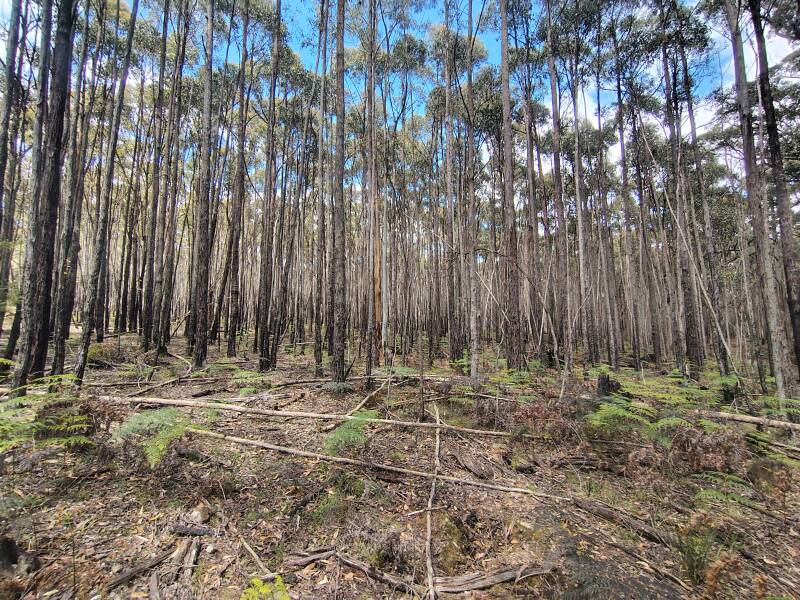
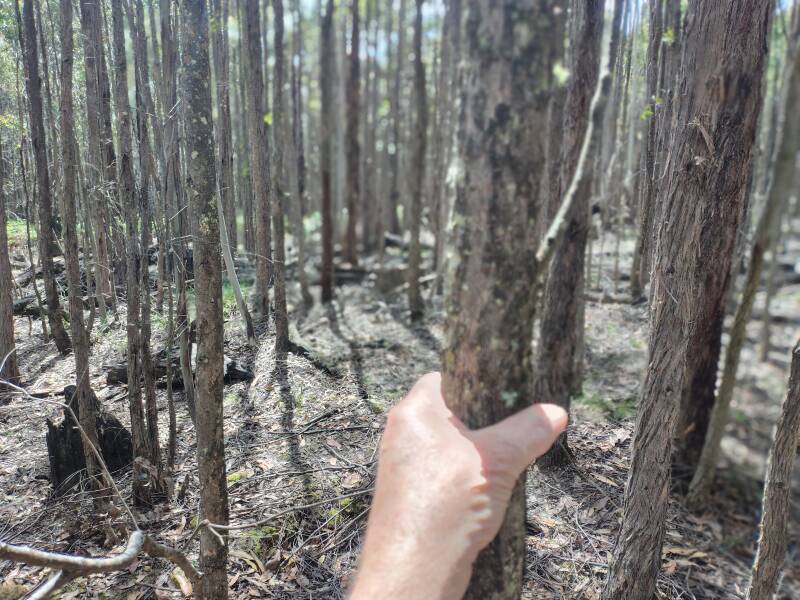
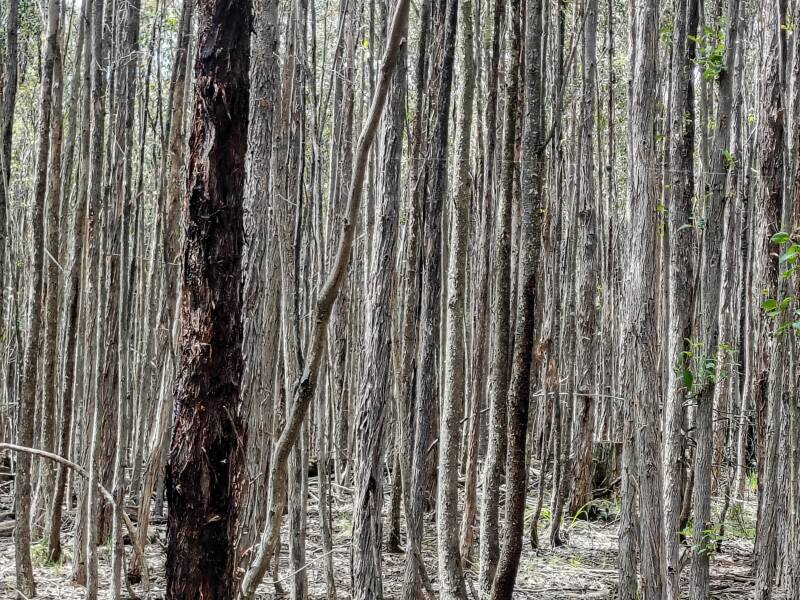
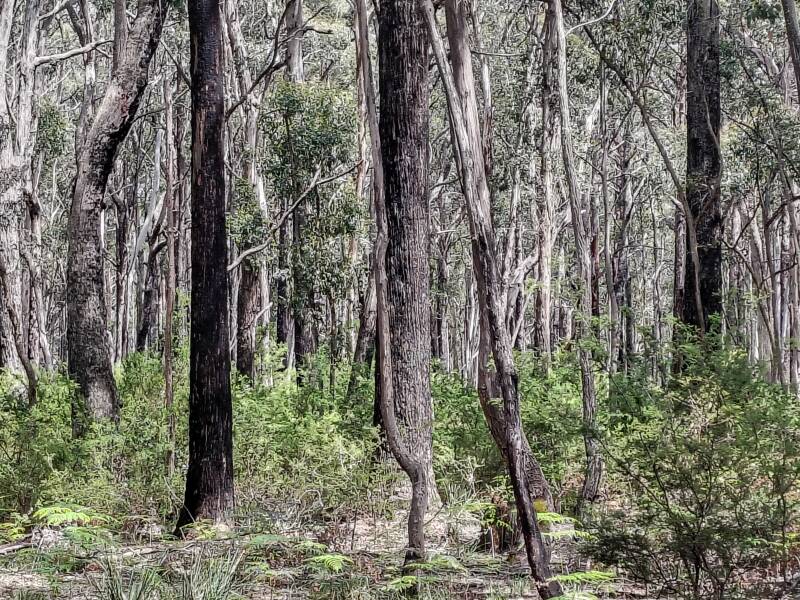
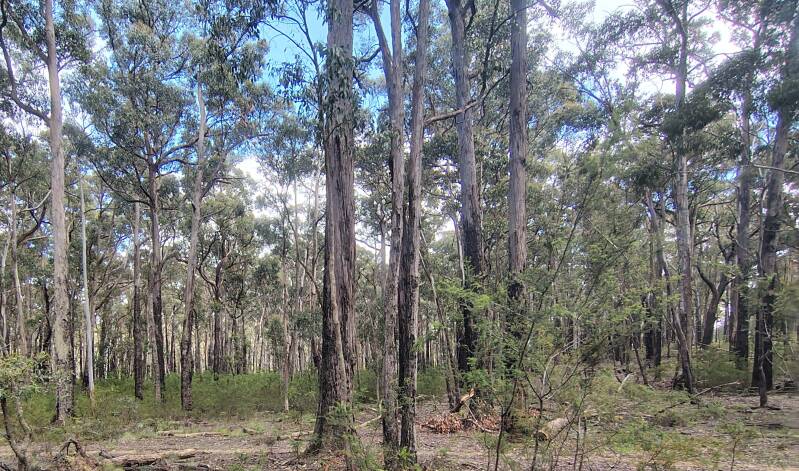
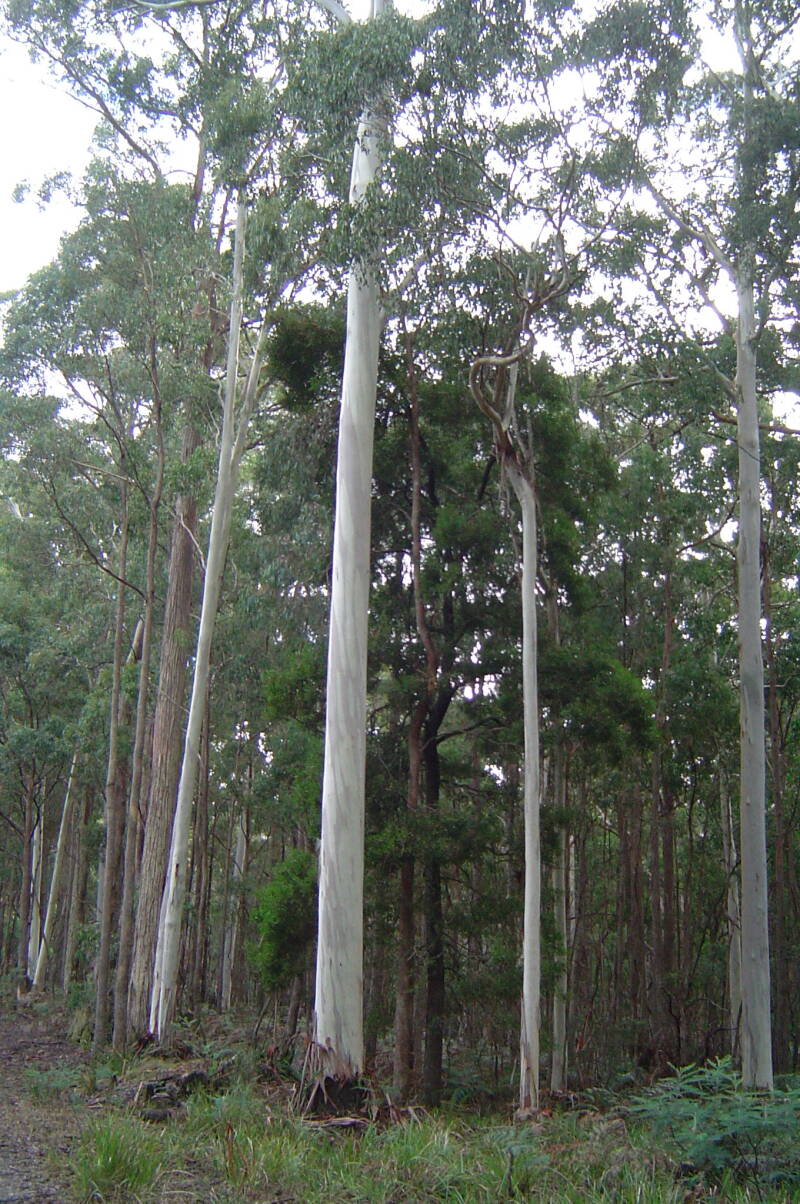
Top 3 photos are of 35 and 40 year old intense regrowth that needs thinning
The 3 photos below are adjacent restoratively thinned forest with healthy herb rich understorey