Summary of Social Scientist, Dr Nelson's, academic study of the WFS, Direct Action, Community Involvement and the Value of Technical Assessments
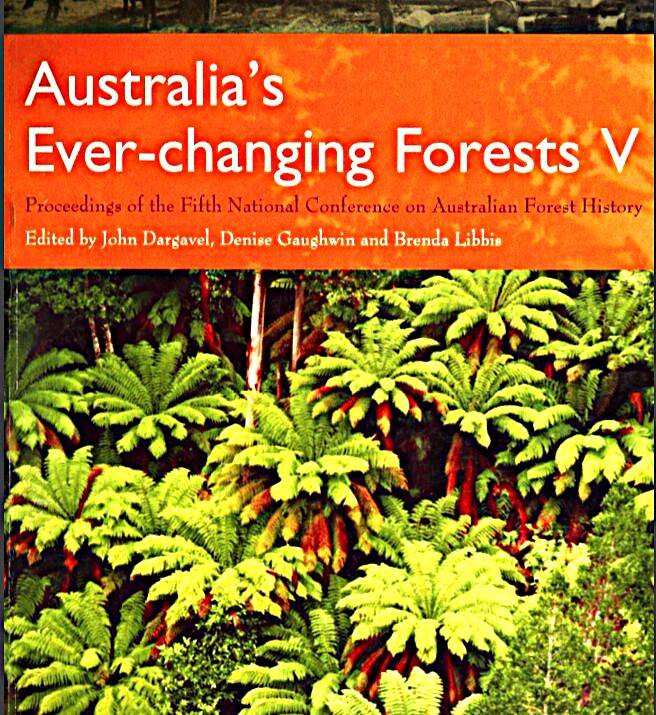
The Wombat Forest Society: Tactics, Talk, Audits and Action a study...
Anitra Nelson’s 2002 study of a different approach to forest campaigning, the views of union leader Michael O’Connor, Industry and Government and the Bullarto forest protest-
In 2002, researcher Anitra Nelson published an important examination of the Wombat Forest Society in Australia’s Ever-changing Forests V, the proceedings of the Fifth National Conference on Australian Forest History. Her chapter, Wombat Forest Society: Tactics, Talk, Audits and Action, provided one of the most substantial contemporary academic accounts of the Society's campaigning methods, political relationships and growing influence over forest management in Victoria.
Nelson was particularly interested in how a relatively small, volunteer-based regional environmental organisation had developed an approach that differed from the confrontational patterns increasingly associated with Victoria's forest conflicts. Her examination went beyond describing the Society's environmental objectives. It explored how its members developed negotiating skills, independent technical expertise, community relationships and political influence, and how these methods were tested during the October 2000 Bullarto forest protest.
Nelson's work is especially valuable because it was based on interviews undertaken during 1999 and 2000 with people representing different sides of the forest debate. These included Wombat Forest Society members Tim Anderson, Loris Duclos, John Endacott and Peter O'Mara, as well as Michael O'Connor from the forestry division of the Construction, Forestry, Mining and Energy Union (CFMEU), Graeme Gooding from the Victorian Association of Forest Industries and local sawmiller Graeme Harding.
She also examined the Society's correspondence, newsletters, submissions, media releases and technical reports. Consequently, her account was not simply a history told by environmental campaigners about themselves. It included the observations of people whose commercial and industrial interests frequently conflicted with the Society's environmental objectives. Nelson nevertheless acknowledged that her detailed reconstruction of Bullarto drew primarily on Society participants and correspondence, making it particularly informative about the Society's intentions and actions rather than an equally comprehensive account of every party's perspective.
Developing a different form of forest campaigning
When the Wombat Forest Society emerged in the mid-1990s, Victorian forest politics had become increasingly polarised. Environmental groups were conducting blockades, occupying logging machinery and organising direct actions intended to stop timber harvesting. Timber workers and contractors, meanwhile, frequently regarded environmental campaigners as a threat to their employment, communities and livelihoods.
Government forestry agencies occupied an increasingly contested position, defending forest management plans and sustainable-yield calculations against growing scientific and public criticism. In this atmosphere, meaningful discussion between the opposing interests was often difficult, and environmental campaigning could become as much a struggle between communities and identities as a dispute over forest management.
Nelson observed that the Wombat Forest Society deliberately developed another approach. It was prepared to challenge forestry decisions vigorously, but it distinguished between the people carrying out those decisions and the government agencies and political processes responsible for making them. Its members recognised that timber workers, sawmillers, conservationists, local residents and recreational forest users could hold deeply different views about the same forest without necessarily being dishonest or unreasonable.
The Society's task was to establish where interests overlapped, identify where they conflicted, and use evidence and negotiation to pursue outcomes that protected ecological values. This was not an abandonment of environmental advocacy. It was an attempt to make that advocacy more effective in a regional community where the social and economic consequences of forest policy were immediately visible.
The decision to avoid blockading was central to this developing strategy. Nelson reported that some environmental activists regarded the Society's reluctance to blockade as excessively conciliatory, even potentially undermining other forest campaigns. These disagreements also contributed to tensions within the Society itself, including an early organisational split. Nevertheless, the Society maintained that direct action should be reserved for circumstances in which other departmental, political or other avenues had failed.
This was a tactical decision rather than an absolute prohibition. By not beginning with confrontation, the Society created opportunities for discussions that might otherwise have been impossible, particularly with timber workers, industry organisations and government officials. Its members also understood that refusing to blockade placed greater demands on their research, negotiating ability and capacity to persuade decision-makers.
The Society was created from environmentalists, local timber families and other locals, concerned about the amount of logging, the intensity of logging, the logging's impact of environmental values, came together to for the Wombat Forest Society and fight for their forest. While this combination of environmentalists and loggers was an unexpected alliance, to the Wombat community, it was just obvious.
Nelson considered that this necessity helped the Society develop unusually sophisticated campaigning methods. Community forums brought together people with conflicting interests and established procedures for respectful discussion. Members sought departmental records, challenged management assumptions, examined forest harvesting plans and produced detailed submissions to government inquiries. The Society also developed relationships with other regional organisations, indigenous groups and other forest campaigns and helped establish the Western Victorian Forest Protection Network during the Regional Forest Agreement process.
Nelson reported that the network had the support of approximately 25 diverse regional organisations, allowing information and campaign strategies to be shared across western Victoria. The Society was therefore developing an alternative form of environmental political influence: one grounded in local knowledge and relationships but capable of reaching government ministers, statewide organisations and the broader public, while having different campaign objectives. The network concentrated on what they agreed on and how they could support each other and fight for positive incremental wins in the RFA process. Wins that became stepping stones for future successes.
Michael O'Connor and the respect of the timber union
One of Nelson's most revealing findings concerned the attitude of the timber industry and its union towards the Wombat Forest Society. In interviews conducted in early 2000, representatives of both the Victorian Association of Forest Industries and the forestry division of the CFMEU independently identified the Society as the one Victorian environmental organisation whose campaigning methods they respected and with which they had held constructive discussions about forest management. Both singled out the Society's outspoken president, Tim Anderson.
In the intensely divided political circumstances of the time, this was a significant acknowledgement. It suggested that the Society had achieved something uncommon: recognition from organisations whose interests were often directly opposed to its own.
Michael O'Connor's comments were particularly important because they demonstrated that mutual respect did not depend on agreement or a softening of the Society's environmental position. Nelson reported that O'Connor described his discussions with Anderson as heated "screaming matches". The observation was both humorous and revealing. The discussions could be fiercely contested, with either side staunchly defending their position, yet the participants continued to engage, respecting they were engaging in their roles, and not personally.
Nelson interpreted this relationship as evidence that the Society's refusal to begin with blockades had helped establish a basis for communication without compromising its independence. The union did not have to agree with the Society's environmental analysis, and the Society did not have to accept the union's industrial position, for discussions to be worthwhile.
This distinction was fundamental to the Society's political method. Its members could strongly criticise the forestry department's management practices, challenge sustainable-yield estimates and argue for substantial reductions in logging while recognising that timber workers had legitimate concerns about employment and economic security. Similarly, timber industry representatives could defend their members' livelihoods while acknowledging the Society's right to question the evidence underpinning forest policy. The disagreements were real, and sometimes intense, but they did not automatically prevent communication. Nelson's account challenges the assumption that effective environmental campaigning necessarily required treating the timber industry and its workforce as a single opposing force.
The importance of this relationship extended beyond goodwill. By maintaining contact with the union and industry representatives, the Society was better placed to distinguish between decisions made by governments and forestry administrators and the consequences experienced by workers and contractors.
This distinction would become particularly important at Bullarto, where the Society found itself contemplating direct action against logging operations for the first time. Its established relationships and negotiating principles helped it manage a confrontation that might otherwise have become a dispute between conservationists and the logging crew.
The Bullarto action: when negotiation was no longer enough
The October 2000 Bullarto dispute became the decisive test of the Society's campaigning philosophy. The controversy concerned a logging coupe of approximately 30 hectares near Osbornes Road, within the Leitches Creek Powerful Owl Management Area. The powerful owl was a threatened species whose survival depended on adequate areas of suitable forest habitat.
The Midlands Forest Management Plan contained prescriptions intended to protect that habitat, including requirements concerning the extent and condition of forest retained within designated management areas. The Society believed that the Department of Natural Resources and Environment had incorrectly calculated the amount of suitable habitat remaining and that further logging would breach its own forest management requirements.
The Society's concerns had first emerged earlier in 2000, when logging commenced in the coupe. Nelson reported that the Department initially withdrew the contractors and agreed to examine the conflicting evidence. Joanne Duncan, the local Member of Parliament for Macedon, had helped mediate discussions, and the Society expected a workshop involving departmental officials and community representatives before further harvesting occurred.
The Society's calculations suggested that approximately 80 per cent of the relevant Powerful Owl Management Area had been logged within the previous 25 years. The Department disputed the Society's interpretation of the prescriptions and the extent of eligible habitat, but the underlying disagreement remained unresolved.
In mid-October the Society discovered that the logging contractor, Pritchards, had been instructed to return to the coupe. The promised examination of the evidence had not produced an agreed resolution. The Society considered it particularly unreasonable that a departmental workshop was scheduled only after logging was due to resume.
From its perspective, the Department was placing contractors in an avoidable confrontation by authorising work while serious questions remained about compliance with the forest management plan. The Society demanded that logging cease until the habitat calculations and management prescriptions could be properly examined. When this was not agreed, it announced that supporters would undertake a monitoring action in the forest.
The preparations demonstrated how carefully the Society attempted to distinguish its action from conventional confrontational blockades. Peter O'Mara organised a community meeting involving local powerful owl specialist Wendy Bone and helped inform supporters about the conservation issues. He also approached the logging crew's representative, Milan Mauric, to explain the proposed action and negotiate safe arrangements. The two agreed to maintain direct communication, and O'Mara informed local police of the Society's intentions.
On Monday 16 October, the contractors voluntarily refrained from logging while the Society attempted to resolve the dispute with the Department. However, a delegation visiting the Daylesford forestry office found that key staff were absent and adequate records were unavailable. The Department maintained that approximately 290 hectares remained available before the powerful owl prescriptions would be breached, a figure sharply at odds with the Society's own investigations.
On Tuesday 17 October, approximately 50 supporters assembled at the Bullarto General Store before proceeding to the forest. The Society described the protest as a monitoring action rather than an indiscriminate attempt to stop all activity. Contractors were permitted to remove logs already felled, while protesters monitored operations to prevent additional trees being cut until the dispute could be resolved. This distinction mattered.
The Society was not attempting to punish contractors for work authorised by the Department; it was seeking to prevent what it believed could be further ecological damage while maintaining a practical relationship with the people working in the coupe. Nelson recorded that the protesters, contractors and police discussed safety arrangements, and that O'Mara continued to act as the principal liaison at the site.
Meanwhile, Anderson and Gary McIntosh, who assisted the Society's investigations but held no formal Society position, met departmental officials in Daylesford to examine the conflicting calculations. The results were revealing. The Department's previously claimed 290-hectare margin was reduced to approximately 57 hectares when revised figures were considered.
Although this did not conclusively establish the Society's interpretation, it substantially narrowed the disagreement and strengthened its argument that logging should not have resumed before the calculations were properly checked. Anderson maintained contact with O'Mara by mobile telephone as negotiations continued, demonstrating the integration of field action and technical discussion that characterised the Society's approach.
The situation nevertheless became tense. The contractors expressed frustration at lost working time and warned that protesters obstructing legitimate operations might face civil proceedings. Departmental representatives also raised the possibility of legal liability for financial losses. Nelson observed the irony that an organisation which had resisted blockading for years was now confronting the possibility of legal consequences associated with anti-blockade measures.
The Society responded by openly discussing the risks among its supporters. It was prepared to defend its position, but recognised that legal proceedings after the event could not restore destroyed habitat. The immediate ecological objective remained paramount: to prevent further harvesting until the disputed management requirements were resolved.
Rather than allowing the dispute to become a personal confrontation with the logging crew, the Society negotiated a compromise involving the possibility of retaining additional forest elsewhere in the Powerful Owl Management Area.
The contractors' willingness to discuss such arrangements reflected the relationships the Society had worked to establish. Yet the central responsibility remained with the Department. The Society's position was that government officials should resolve the conservation questions before instructing contractors to undertake work that could generate conflict.
The Community Forest Embassy and the negotiated outcome
On Wednesday 18 October, the action moved from the forest to the Department's Daylesford office. A local, Dave Stephens, erected a large teepee outside the building, creating what became known as the Wombat Forest Embassy or Community Forest Embassy. Supporters gathered for discussions, food and music, while negotiations continued inside. The teepee was more than a colourful protest symbol. It provided a public meeting place, a source of information and a visible expression of the Society's argument that forest management decisions should involve the community rather than be confined to discussions between departmental officers and commercial interests.
Nelson's account of the negotiations reveals another distinctive feature of the Society's methods. When departmental officials sought to meet privately with a small delegation, Anderson proposed that Society supporters be allowed to observe the discussions in rotation. The intention was to make the process more transparent and allow ordinary community members to see how forestry decisions were debated. The participants included a mother and young child. For Anderson, the negotiations were not merely about obtaining a favourable decision; they were also an opportunity for community members to become more confident and informed participants in public decision-making.
Eventually, departmental officials agreed to address the assembled community inside the teepee. Nelson described how the officials removed their shoes before entering, a gesture that helped establish a more informal and respectful atmosphere. Peter O'Mara subsequently remarked that the occasion was intended to be light-hearted rather than mocking and that the officials had gained credibility by entering the community's meeting space.
The incident captured something important about the Society's approach. It had challenged the Department publicly and forcefully, yet still sought a setting in which officials could explain their position without being treated as enemies.
Regional manager Andrew Maclean told the gathering that the Department's revised information still indicated that its powerful owl prescriptions had not technically been breached, although the margin was now narrow. He proposed a compromise under which Pritchards would complete work in the disputed Bullarto coupe, but no further logging would occur elsewhere in the Powerful Owl Management Area for ten years. Two other partially harvested coupes would consequently be left alone.
This was a significant concession compared with the Department's earlier position, although it did not deliver the immediate protection of the entire Bullarto coupe that the Society had sought.
The apparent agreement did not end the controversy. Subsequent correspondence from Maclean raised questions about whether the ten-year commitment would be maintained in the form announced at the Community Forest Embassy. Anderson demanded written confirmation and continued to press the Department over its habitat calculations. Further field investigations suggested to the Society that the Department might already have exceeded its allowable harvesting limits.
By 24 October, information indicated a possible shortfall of approximately 52 hectares against the relevant prescriptions. These were the Society's calculations and allegations, not an independently established legal finding, but they reinforced its determination to secure a clear departmental response.
The negotiations continued through the following week. Anderson warned that the Society was prepared to return to direct action and pursue complaints through state and Commonwealth processes if the Department failed to honour its commitments. On the evening of 26 October, he participated in further discussions involving Maclean and timber industry representatives, including sawmillers and logging interests.
The Department had arranged for its GIS team in Melbourne to produce an up to date spatial analysis of logging history in the POMA that night. It confirmed that the POMA had been overcut.
The following day, Anderson reported that the loggers were being withdrawn. The outcome was achieved not through protest alone but through the cumulative effect of monitoring, public pressure, technical analysis, negotiations with contractors, community mobilisation and the threat of further action.
Anderson drove out to the coupe and explained exactly the situation and reason. The contractors told Anderson that no one from the Department had bothered to come out to the coupe and inform them of the situation and appreciated the WFS having the decency to do it.
The human cost of Bullarto
Nelson did not present Bullarto as an uncomplicated environmental victory. One of the most affecting passages in her chapter concerned the fate of Pritchards Logging, the contractor caught in the dispute. The company subsequently applied for a Regional Forest Agreement exit package and left the timber industry.
Nelson reported that Bullarto had been the fourth successive coupe in which the contractor had been relocated or experienced operational difficulties. The episode demonstrated the insecurity facing small timber businesses during a period of declining resource availability, industry restructuring and environmental conflict.
John Endacott, reflecting on the outcome in correspondence with Nelson in December 2001, expressed considerable distress about the contractor's departure. He regarded the people involved as respectable and conscientious workers who had suffered from circumstances largely beyond their control.
His response demonstrated that the Society's social concerns were not merely rhetorical. Its members could recognise the importance of protecting threatened wildlife while also regretting the hardship experienced by people whose livelihoods depended on decisions made by government and industry. Anderson similarly observed that the contractor appeared to be subordinate to the decisions of more powerful institutions.
This was a critical distinction in Nelson's interpretation of the Society. Bullarto demonstrated that environmental action could be uncompromising in its ecological objectives without being indifferent to its social consequences. The Society had not avoided direct action because it lacked determination. It had delayed that option because it understood the potential damage that confrontation could inflict on relationships within a small regional community.
When direct action became necessary, the Society attempted to conduct it in a manner consistent with its broader values. The protesters did not regard the logging crew as the enemy, and the Society continued to argue that responsibility for the dispute rested principally with the Department's management decisions.
The Bullarto episode therefore brought together the two dimensions of the Society's campaigning philosophy that Nelson considered inseparable: environmental sustainability and social justice. It also exposed their difficulty. Protecting habitat could still produce consequences for workers, even when campaigners made every effort to avoid them.
Nelson's account does not suggest that such tensions could always be eliminated. Rather, it shows an organisation attempting to confront them openly instead of denying their existence.
Australian Forest History Society
Research, auditing and political influence beyond Bullarto
Although Bullarto provided the central narrative of Nelson's chapter, her broader argument concerned the Society's development as an organisation capable of challenging the technical foundations of government forest management. The Society's work extended beyond individual logging coupes to questions about timber yield, forest regeneration, water catchments, biodiversity and the reliability of departmental information.
Its members developed auditing procedures to compare planned logging operations with actual harvesting and forest conditions. Local observations gathered on foot and horseback were combined with historical records, departmental maps and computer-based analyses. This integration of community knowledge and technical investigation became one of the Society's most important strengths.
Nelson particularly acknowledged the work of Loris Duclos and Tim Anderson in developing methods for examining departmental data and modelling. Their analyses challenged the assumptions underpinning sustainable-yield calculations and questioned whether the quantities of timber being authorised for harvesting could be maintained without further damaging the forest.
The Society's technical work gained increasing attention beyond the Wombat, contributing to newspaper reporting and editorial commentary in The Age during February and March 2001. Nelson noted that politicians and academics had begun seeking the Society's advice on forestry issues, demonstrating how its influence had extended beyond its immediate membership and geographical area.
The political significance of this work became especially apparent in 2001 when Joanne Duncan facilitated discussions involving Anderson, O'Mara and Duclos with Premier Steve Bracks, Environment Minister Sherryl Garbutt and senior departmental officials. The discussions concerned sustainable-yield calculations not only in the Wombat Forest but across Victoria. Nelson reported that the Premier subsequently authorised access to departmental data, providing the Society with further opportunities to scrutinise official forestry assumptions.
The Society continued to press for an Auditor-General's investigation and wider reform of forest management. Its campaign was no longer confined to protecting particular coupes or species; it had become a challenge to the systems through which logging volumes were calculated and justified.
Nelson also examined the limitations of the government's attempts to introduce greater community participation through regional forest reference groups. She discussed the dispute over powerful owl habitat near Trentham, where the Midlands Regional Forest Reference Group failed to reach a satisfactory consensus. Some environmental representatives resigned in frustration, while Anderson argued for remaining involved unless participation required compromising fundamental principles.
His position reflected the Society's broader belief that imperfect institutions could sometimes be improved through determined engagement. Nelson nevertheless recognised that advisory bodies without genuine decision-making powers could become exercises in consultation rather than meaningful community involvement. The problem was not simply whether people were invited to meetings, but whether their evidence and participation could influence the decisions ultimately made.
By the time Nelson completed her chapter, the Bracks government had announced its February 2002 Our Forests, Our Future reforms, including substantial reductions in sustainable-yield estimates and changes to the administration of commercial forestry. Nelson placed the Society's work within the political developments that preceded these reforms, while also recognising that wider pressures and other organisations contributed to the changing policy environment. The Society's influence lay in demonstrating that independent community research could expose weaknesses in established forestry calculations and help create pressure for more accountable management.
Australian Forest History Society+1
Nelson's contribution to understanding the Wombat Forest Society
The lasting importance of Anitra Nelson's 2002 chapter is that it documented a form of environmental campaigning that did not fit neatly into the conventional divisions of the Victorian forest conflict. The Wombat Forest Society was neither a passive conservation association nor a group that regarded direct confrontation as its primary measure of commitment.
It was prepared to challenge government departments, confront flawed decisions and organise direct action, but it sought to do so through a carefully developed combination of evidence, negotiation, public participation and political pressure. Its willingness to engage with timber workers and industry representatives was not a sign of weakness; it was part of a strategy intended to make environmental advocacy both more credible and more effective.
Michael O'Connor's observations are central to this historical interpretation. That a senior timber union representative could identify the Society as an environmental organisation worthy of respect, while also acknowledging the intensity of his disagreements with its president, illustrates the unusual relationships it had established.
The Society had not dissolved the conflict between conservation and commercial forestry, but it had demonstrated that people on opposing sides could argue forcefully without abandoning the possibility of communication. The Society separated the person from their role. Nelson's account suggests that this capacity was one of the Society's most important political assets.
Bullarto provided the practical demonstration. The Society had initially relied on dialogue, technical investigation and departmental undertakings. When these failed to resolve a potentially serious conservation issue, it mobilised supporters and undertook its first direct action. Yet even in the forest, its representatives negotiated safety arrangements, maintained contact with contractors and attempted to distinguish those carrying out logging from those responsible for authorising it.
When the dispute shifted to Daylesford, the Society transformed a departmental negotiation into a public community process. The eventual withdrawal of the logging crew followed a sequence of technical challenges, public mobilisation, political pressure and continuing discussions with the people involved. The result was not without costs, but it demonstrated that direct action could form part of a broader, disciplined strategy rather than replace it.
Nelson ultimately presented the Wombat Forest Society as an important experiment in democratic forest management. Its work challenged the assumption that forestry decisions should remain primarily the responsibility of government specialists and commercial interests, with communities restricted to commenting on decisions already substantially formed.
The Society insisted that local knowledge, ecological values, social consequences and independent technical scrutiny deserved a meaningful place in determining the future of public forests. Its significance in Victorian and Australian environmental history lies not only in the particular outcomes it achieved, but in the methods it developed: combining research with political determination, recognising different community interests without surrendering environmental objectives, and treating direct action as one carefully considered instrument among many. Nelson's contemporary account provides compelling evidence that the Wombat Forest Society fought for its forest differently—and that this difference mattered.
---------------------------------------------------------------------------------------------------------------------------------------------------
Principal reference
Nelson, Anitra (2002), ‘Wombat Forest Society: Tactics, Talk, Audits and Action’, in John Dargavel, Denise Gaughwin and Brenda Libbis (eds), Australia’s Ever-changing Forests V: Proceedings of the Fifth National Conference on Australian Forest History, Centre for Resource and Environmental Studies, Australian National University, Canberra, pp. 375–395.
Read the complete original publication (Australian Forest History Society PDF)
This essay draws principally on Nelson's published chapter, including her interviews and account of the October 2000 action. It distinguishes the Society's claims about departmental compliance from independently established findings and does not treat the Bullarto outcome as proof that every disputed management prescription was breached.