
Climate Change and the Future of the Wombat Forest: Vegetation, Wildlife and the Urgent Need for Ecological Restoration
A forest facing a climate for which it was not established
Climate change presents a fundamental challenge to the future of the Wombat Forest. The forest's vegetation communities developed under climatic conditions that are already changing, and the changes expected over the coming decades will place increasing pressure on its trees, soils, understorey vegetation and wildlife. Higher temperatures, greater evaporative demand, more severe droughts, increasingly dangerous fire weather and changes in seasonal rainfall will affect not only the health of individual trees but also the types of forest that can survive across the landscape.
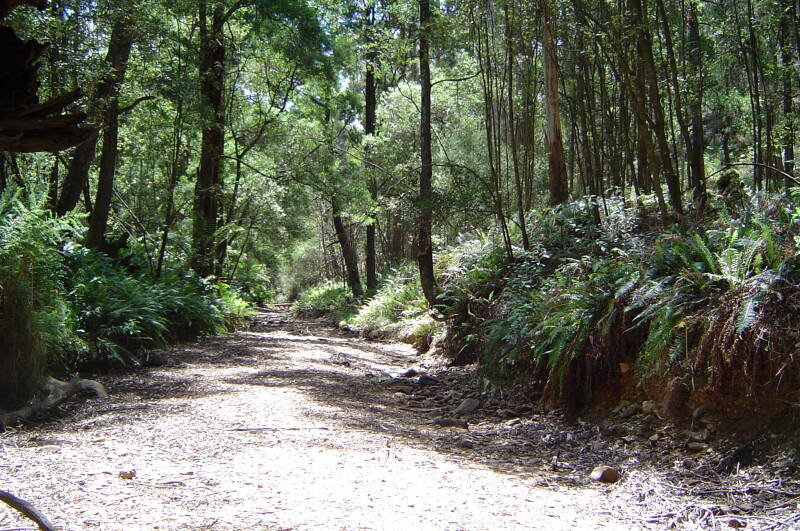
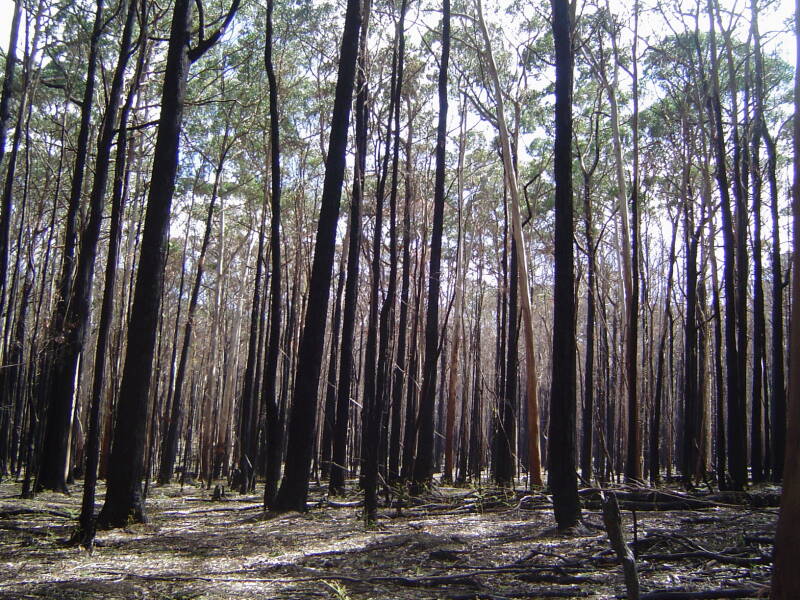
The Wombat is particularly vulnerable because much of its vegetation is not mature forest growing under relatively undisturbed conditions. Extensive areas were subjected to shelterwood harvesting and intense regeneration burns, leaving extraordinarily dense stands of eucalypt regrowth. Some contain approximately 10,000 stems per hectare, with trees that remain severely suppressed after 30 to 40 years of growth.
These trees are competing for moisture and nutrients on soils that are often naturally shallow and were further disturbed by earlier forestry operations. On some ridges and slopes, the biologically active topsoil may be only 50 millimetres deep. Regeneration burns involving substantial quantities of logging debris consumed organic matter and damaged soil biological communities, contributing to the difficult growing conditions experienced by subsequent regrowth.
Climate change will intensify those existing pressures. A forest already struggling to develop under historical climatic conditions faces an increasingly difficult future as temperatures rise and moisture becomes less reliable.
The consequences extend far beyond tree growth. The forest's capacity to support greater gliders, powerful owls, phascogales, possums, forest birds, reptiles and invertebrates depends on the development and persistence of appropriate vegetation communities. If those communities become shorter, drier, less productive or more frequently disturbed by fire, the habitat available to wildlife will change with them.
The central challenge for conservation is therefore to manage the Wombat for the climate it is entering, rather than assuming that the forest will naturally return to the condition it occupied before industrial forestry.
How climate change will alter the forest's growing conditions
The most important climatic change is the combination of rising temperature and increasing atmospheric demand for moisture. Warmer air can draw more water from soils and vegetation, increasing evapotranspiration. Consequently, trees may experience greater water stress even in years when total rainfall is not dramatically below historical averages.
Seasonal rainfall patterns are also important. Southeastern Australia has experienced substantial declines in cool-season rainfall in recent decades, and climate projections indicate continued pressure on winter and spring rainfall in southern Victoria. These are important seasons for replenishing soil moisture before summer.
For the Wombat, reduced cool-season replenishment combined with hotter summers means that trees may enter the warmest months with less water available. Longer dry periods can restrict growth, reduce crown development and increase mortality during severe droughts.
The consequences will differ across the landscape. Moist gullies, sheltered slopes and deeper soils will generally retain water longer than exposed ridges and shallow soils. North- and west-facing slopes, which receive greater solar exposure, are likely to experience more severe moisture stress than cooler sheltered locations.
This variation will become increasingly important in determining which vegetation communities persist.
The main climate pressures on Wombat Foresti
Higher temperatures
Less reliable rainfall
Greater fire danger
Vegetation change
The combined effect will be a progressive change in the environmental conditions under which the Wombat's existing eucalypts established. Trees that were suited to the climate of the twentieth century may become increasingly stressed during the twenty-first.
The possible transition from taller foothill forest to shorter, drier vegetation
The Wombat's vegetation communities are distributed according to differences in elevation, rainfall, soils, slope and exposure. Its eucalypt forests include messmate, peppermint, various gums and other species adapted to particular environmental conditions.
Historically, wetter and cooler parts of the region supported taller and more productive forest communities, while exposed ridges and drier sites supported shorter vegetation. The survival of ash forests in suitable environments around Mount Macedon and Mount Cole illustrates how cooler, wetter conditions can sustain vegetation communities that are less suited to the surrounding drier landscape.
As temperatures rise and moisture availability declines, the environmental boundaries separating these communities are likely to shift.
In some locations, taller forest communities may experience increasing canopy dieback, reduced regeneration success and greater mortality of moisture-sensitive species. Following severe drought or fire, replacement vegetation may favour species better adapted to dry conditions. Over successive disturbances, some sites could support shorter, more open eucalypt forest, woodland or shrub-dominated vegetation rather than the taller forest previously present.
This process would not occur uniformly or simultaneously. Sheltered gullies and deeper soils may continue to support relatively moist forest communities while nearby ridges undergo substantial change. The resulting landscape could become more fragmented, with smaller areas of suitable habitat for species dependent on tall forest.
The significance of this potential transition is that conservation objectives cannot be based solely on maintaining existing vegetation classifications. A forest's ecological vegetation class describes an existing or historically characteristic plant community, but future climatic conditions may no longer support every component of that community in its present location.
Restoration must therefore consider both the vegetation that occupied a site historically and the vegetation likely to remain viable under future conditions.
This does not justify abandoning existing forest communities or deliberately converting them to drier vegetation. It means recognising that their survival will increasingly depend on site conditions, ecological resilience and the frequency of disturbance.
What the climate projections mean for the Wombat
Victoria's 2024 climate projections provide a quantitative basis for assessing the forest's future. For the Central Highlands region, average temperatures are projected to increase under both low- and high-emissions scenarios. Under high emissions, the projected increase reaches approximately 3°C by 2090 relative to 1986–2005. Cool-season rainfall is expected to decline over the long term, while hot days, heatwaves and dangerous fire weather increase.
These figures are particularly important when considering the timescale of forest restoration. A tree released from competition today may require several decades to develop substantial diameter and crown structure, and much longer to produce the hollows associated with mature forest.
During that period, the growing environment will continue to change. Restoration decisions made now will therefore determine which trees have the best opportunity to survive and develop under the climatic conditions of 2050, 2070 and beyond.
The risk of ecological stagnation in overstocked regrowth
The Wombat's heavily overstocked stands represent one of the most difficult restoration challenges because climate change will act upon forests already suffering from prolonged growth suppression.
At densities approaching 10,000 stems per hectare, the competition for soil moisture is enormous. During drought, thousands of root systems draw upon the same limited water reserves. The resulting stress restricts growth, reduces the capacity of trees to maintain healthy crowns and increases vulnerability to mortality.
Natural self-thinning will progressively eliminate some stems, but the development of a mature forest structure may take centuries. The problem is that the climatic conditions required for that development are changing while the process is underway.
In severely suppressed stands, a plausible future is a landscape containing scattered surviving dominant trees, large numbers of dead standing stems and persistent thickets of suppressed regrowth. The surviving trees may eventually benefit from reduced competition, but their development could remain constrained by poor soil conditions, recurring drought and further disturbance.
This would not represent the recovery of a healthy mature forest. It would be a continuation of the structural impoverishment created by earlier forestry practices.
An important recent assessment supports the need for active restoration. The Arthur Rylah Institute's The Future of the Wombat Forest: The Aspirations of Co-managers identifies areas damaged by past forestry where dense stands of small trees compete for resources, restrict forest growth and provide inadequate wildlife habitat. It describes delicate thinning as a potential means of encouraging retained-tree growth and habitat development, while recognising the need to manage weed invasion and other ecological consequences.
Arthur Rylah Institute
This is a significant distinction. The objective of ecological thinning is not to reproduce commercial forestry. It is to address the damage left by forestry and accelerate the development of a more resilient forest.
Consequences for the Wombat's wildlife
Changes in forest structure and vegetation composition will affect wildlife differently. Some animals may benefit from more open vegetation, while others face the loss of habitat features that cannot be replaced quickly.
Southern greater glider
Greater gliders are particularly vulnerable to the loss of tall, mature eucalypts, hollow-bearing trees and suitable foliage. Increasing heat stress and the loss of cooler forest refuges threaten their survival. The national recovery plan identifies drought, heat, vegetation dieback and changes in food-tree composition as important climate-related threats.
Powerful owl
Powerful owls depend on large nesting trees and sufficient arboreal mammal prey. Loss of mature forest, declining possum and glider populations, and repeated severe fires can reduce the availability of suitable breeding and hunting habitat.
Phascogales require tree hollows, connected habitat and adequate invertebrate prey. Prolonged drought, loss of large trees and changes in forest-floor ecology can reduce these resources.
Wallabies, kangaroos and ground-dwelling fauna
Changes in grasses, shrubs and ground cover will alter feeding and shelter opportunities. Some species may benefit from more open forest, but drought, weed invasion and repeated fire can reduce food availability and expose smaller animals to predators.
The greater glider provides a particularly compelling example of why the Wombat cannot afford to wait indefinitely for mature forest habitat to develop.
Research by the Arthur Rylah Institute found that the severe 2021 storm was associated with an estimated 39% reduction in southern greater glider abundance across the Wombat study region. The finding demonstrates how a major disturbance can rapidly diminish a population dependent on mature forest structure.
Arthur Rylah Institute
Climate change increases the significance of such disturbances. A severe storm, wildfire or prolonged drought may destroy habitat that took more than a century to develop. Replacing it requires much longer than the event that caused its loss.
The consequences also extend to forest birds, reptiles, amphibians and invertebrates. Insect-eating birds depend on productive understorey and canopy habitats. Amphibians are particularly sensitive to the drying of moist gullies, seepages and temporary water bodies. Reptiles respond to changes in ground cover, temperature and shelter. Soil invertebrates and fungi depend on moisture, organic matter and the availability of decomposing vegetation.
A decline in understorey diversity can therefore trigger changes throughout the food web.
Why fire becomes a greater threat to recovery
The Wombat's future fire regime will be a major determinant of vegetation structure. Climate change is increasing the occurrence of dangerous fire weather across south-eastern Australia, with longer fire seasons and more frequent conditions favourable to severe bushfires.
Climate Change- The ecological consequences depend on fire intensity, frequency and the capacity of vegetation to regenerate.
Many eucalypts are adapted to fire and can recover through epicormic growth, lignotubers or seedling regeneration. However, repeated severe fires can prevent trees from reaching reproductive maturity, exhaust recovery resources and alter the composition of vegetation communities.
In the Wombat's severely suppressed regrowth, another intense fire could destroy trees that have spent decades struggling to grow. Subsequent regeneration might again produce dense seedling stands, recreating the same competition that followed shelterwood harvesting.
This creates the possibility of a recurring cycle: dense regeneration, prolonged suppression, drought stress, severe fire and another episode of dense regeneration.
Such a cycle would continually delay the development of mature trees and the associated wildlife habitat.
Fire management must consequently be integrated with restoration. Protecting mature habitat, retaining ecological refuges, reducing inappropriate disturbance and using carefully designed cultural fire where suitable are all important considerations.
Thinning operations must also account for fuel structure. Cut stems left on the forest floor can contribute organic matter and nutrient cycling, but their quantity and arrangement must be managed so that restoration does not create unacceptable local fire hazards.
The objective is not simply to reduce fuel. It is to develop a forest with greater ecological resilience to the fire regimes expected under future climatic conditions.
Why restoration must be designed for future climatic conditions
Traditional forest restoration often aims to return a disturbed site to its historical vegetation structure and species composition. That remains an important reference point, but climate change means that historical conditions cannot automatically be treated as a reliable guide to future ecological success.
For the Wombat, the most effective strategy is to combine historical ecological knowledge with projections of future temperature, rainfall, drought and fire.
1. Reduce competition before climate stress intensifies
The most severely overstocked stands should be prioritised for assessment and carefully designed ecological thinning. Reducing competition can improve the availability of moisture, nutrients and light to retained trees, allowing their crowns and root systems to develop more vigorously.
Thinning should be staged rather than undertaken as a single dramatic reduction in stem density. The initial treatment should be followed by monitoring of growth, mortality, soil moisture, understorey recovery and fire risk. Subsequent treatment can then be adjusted to the response of the forest.
The objective is to establish a developing forest capable of surviving increasingly severe dry periods, not simply to produce rapid growth under present conditions.
2. Restore soils and the forest's biological productivity
The Wombat's shallow soils are fundamental to its vulnerability. Where earlier regeneration burns consumed organic matter and disturbed soil organisms, recovery requires rebuilding the biological processes that support vegetation growth.
Small stems removed during restoration thinning can be retained as distributed woody debris where ecologically appropriate. Their decomposition returns nutrients, provides habitat for fungi and invertebrates, and contributes to the forest-floor organic matter.
Restoration should also encourage the recovery of native understorey plants. Different vegetation layers contribute to nutrient cycling, habitat diversity, soil protection and the functioning of the ecosystem.
Under a hotter climate, protecting soil moisture and reducing erosion will become increasingly important.
3. Protect climatic refuges and mature habitat
Sheltered gullies, south-facing slopes, deeper soils and relatively moist forest communities will become increasingly valuable as refuges for species sensitive to heat and drought.
These areas should receive strong protection against unnecessary disturbance. Existing hollow-bearing trees, large fallen logs and mature canopy connections are particularly important because they cannot be replaced quickly.
Restoration should also improve connectivity between suitable habitat areas, allowing animals to move across the landscape as conditions change.
The 2026 national recovery plan for greater gliders specifically identifies the protection, restoration and expansion of habitat within climatic refuges as an important conservation strategy.
Federal Register of Legislation
4. Recognise that vegetation communities will change
Restoration should not assume that every part of the Wombat will support the same vegetation community in 2100 as it did in 1900.
Some wetter forest communities may persist in sheltered locations while drier vegetation expands across exposed sites. Management should maintain locally appropriate native species diversity and natural regeneration, while monitoring whether particular species are becoming less suited to their environment.
Where restoration planting is necessary, seed provenance and genetic diversity should be considered in relation to future climatic conditions. Carefully selected climate-adjusted provenances may be useful in some circumstances, but introducing unfamiliar species or replacing existing communities should not be the default response.
The objective is to preserve the forest's ecological functions and biodiversity while recognising that its species composition and structure may change.
5. Establish long-term adaptive management
A restoration programme extending over many decades cannot rely on a fixed prescription developed at its beginning.
Permanent monitoring plots should compare treated and untreated stands, measuring tree growth, stem mortality, canopy development, soil condition, vegetation diversity, carbon stocks and wildlife habitat.
These measurements would allow management to respond to changing climatic conditions and demonstrate whether restoration is producing measurable ecological improvements.
Traditional Owner-led forest gardening, ecological research and practical restoration should form part of the same programme. The Wombat's co-management research already identifies careful thinning and restoration of historically damaged forest as important opportunities.
Arthur Rylah Institute
The difference between protecting today's forest and securing tomorrow's forest
The distinction can be summarised in terms of the outcomes sought.
- Conventional protection-focused approach
- Climate-adapted restoration approach
- Prevents further commercial harvesting
- Prevents exploitation while repairing historical damage
- Relies substantially on natural forest development
- Uses targeted intervention where severe suppression restricts recovery
- Uses historical vegetation as the principal reference
- Considers historical ecology alongside future climatic suitability
- Protects existing habitat
- Protects existing habitat while accelerating development of future habitat
- Allows natural mortality to reduce dense regrowth
- Tests staged thinning to reduce competition and improve growth
- Concentrates on current conservation values
- Also addresses drought resilience, climatic refuges and future vegetation change
These approaches are not mutually exclusive. Mature and relatively intact forests may be best protected through minimal disturbance, while severely damaged regrowth may benefit from active restoration. The appropriate treatment depends on ecological condition and conservation objectives.
Conclusion: the Wombat must be restored for the century ahead
The greatest long-term danger to the Wombat Forest is the interaction between historical ecological damage and a rapidly changing climate.
Shelterwood harvesting and intense regeneration burns left extensive areas of dense regrowth competing for limited soil resources. Some stands have remained severely suppressed for decades. Their development into mature forest may require centuries if left entirely to natural self-thinning, while climate change is progressively altering the conditions under which that development must occur.
Higher temperatures, declining cool-season rainfall, greater drought stress and increasingly dangerous fire weather will make recovery more difficult. Some vegetation communities may become shorter and drier, while others retreat towards sheltered locations. The consequences for greater gliders, powerful owls and other forest-dependent wildlife could be substantial.
The Wombat's future therefore cannot be secured solely through the prevention of further commercial harvesting. It requires an ecological restoration strategy that recognises the damage already inflicted and anticipates the environmental conditions ahead.
The Wombat Climate Forest concept provides a framework for that responsibility. It combines protection of mature habitat with targeted restoration of suppressed regrowth, rebuilding of soil function, Traditional Owner-led management, biodiversity conservation and long-term climate adaptation.
Its success would not be measured by the number of trees left standing immediately after a management decision. It would be measured by the development of vigorous trees, recovering understoreys, resilient soils, connected habitat and wildlife populations capable of persisting through the climatic changes of the coming century.
The essential conservation objective is not to preserve the Wombat in its present damaged condition, nor to assume that it can return unchanged to its historical state. It is to give the forest the best possible opportunity to become a healthy, functioning and resilient ecosystem under the climate of the future.